Live music for bars & nightclubs
DJ residencies, sax over the DJ and live acts before the club night - post free, hear the act, sign the contract.
Book DJs, live acts and sax or percussion over DJ sets for your late bar or nightclub direct. Live UK pub and bar fees, the rules after 11pm, a contract every time.
Updated 9 November 2026
GIGXCHANGE is where a UK late bar or nightclub can book DJs and live music direct. 1,061 artists and 77 venues across 80 cities are on the platform, from DJs and saxophonists to party bands. A bar or club posts its date free, checks each act’s recordings where available before enquiring, agrees the fee in the chat and signs a contract on every booking. On the live GX Index a solo act at UK pubs and bars is typically £260 (729 fees) and a 3 to 4 piece band £350 (488 fees). The booking fee is 5% on top only when you pay through GigXchange – 0% when you settle privately.
A late bar or nightclub books its DJs and acts for nights that run past 11pm. Agree the fee, timings and equipment in writing: the set times, who brings the decks and sound, and the finish your licence allows.
After dark the stakes are higher than in a daytime pub. Music after 11pm normally needs authorisation through the premises licence or an eligible TEN, the door has to be right, and a club night has to earn back the DJ’s fee at the till or on the door.
On GigXchange the manager can hear the DJ or act before booking, where the profile includes recordings. The fee, the set times and the kit go into a contract both sides sign, and GX Gig Rescue sends an urgent invite to available acts nearby if someone drops out. The live GX Index shows what UK pubs and bars pay, so the budget comes from data.
| 02Book live music in five stepsFrom an empty date to a signed booking | |
| 03Pub and bar feesSet a fair budget before you post | |
| 04Venues that host live musicThe venues in our directory | |
| 05Members across the UKThe acts and rooms near you | |
| 06The licence rulesEach with its official source | |
| 07Nights after darkFour ways late bars and nightclubs use DJs and live acts. Start with the one that fits your room and your licence, then build the night up week by week. | |
| 08Music after 11pmThe four things that change when the music runs past 11pm. Each one is a rule a late bar or club meets on every late night, with the official page it comes from. | |
| 09Club-night moneyHow a night pays for its music, from a bar’s own DJ to a promoter’s club night. Settle the deal before the date goes on the poster. | |
| 10Choosing the right actWhat to check before you book, so the night goes the way you planned: hear them first, search by the sound your room suits, ask about insurance cover and agree who brings the kit. | |
| 11Free tools for your barFree with a venue account: the fee calculator, the contract generator and the poster tools venues use to plan a night and fill the room, with no card on file. | |
| 13QuestionsWhat bar and club managers ask before they book | |
| 14Keep exploringThe other guides and the longer reads |
| Step 01Post your gig, freeAdd the date, your budget, the genres you want and your house kit in about two minutes. Acts apply to you - or browse and invite them yourself. | |
| Step 02Hear them before you bookAct profiles carry the audio, video and reviews the act has added, so you can judge them before you ask. | |
| Step 03Agree it in the chatMessage the act directly, settle the fee, sets and kit, and the offer lands in the same thread. | |
| Step 04Sign the contractEvery booking makes a digital performance agreement, signed by both of you, with a full audit trail. | |
| Step 05Pay the act5% on top only when you pay through GigXchange – 0% when you settle privately. A protected payment holds the deposit with Stripe and releases it after the gig. | |
| If plans changeIf the act drops outGX Gig Rescue sends an urgent invite to available acts near you. The first to accept is booked. |

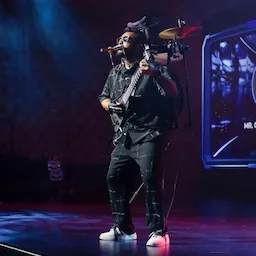









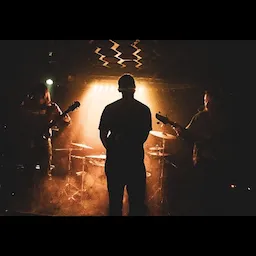
What does live music cost a UK bar? In the GX Index the median pub and bar fee is £260 (729 fees) for a solo act, £325 (122 fees) for a duo, £350 (488 fees) for a 3 to 4 piece band and £525 (395 fees) for a 5+ piece.
Median UK pub and bar fees in the GX Index - it does not yet split out DJs or nightclubs. Marker: the Musicians’ Union recommended minimum for pubs and clubs (up to 3 hours, per musician, April 2026).
- Solo act £260 median · 729 observationsThe MU publishes no solo figure
- Duo £325 median · 122 observationsMU minimum £334.32
- 3 to 4 piece band £350 median · 488 observationsMU minimum £501.48 · for 3 players; 4 players: £668.64
- 5+ piece band £525 median · 395 observationsMU minimum £835.80
You pay the act’s fee. 5% on top only when you pay through GigXchange – 0% when you settle privately.
| GuideHow much gigs payUK gig fees by venue type. | |
| ToolRate calculatorA fair fee for your night. | |
| DataGX IndexEvery UK fee table, open data. |
77 venues are on GigXchange across the UK. Joining is free: list your bar or club, post a gig and message DJs and acts at no cost. 5% on top only when you pay through GigXchange – 0% when you settle privately, and every booking comes with a contract you both sign. Where can a bar or nightclub book DJs and live music in the UK? On GigXchange, a venue posts its date free, hears the DJs and acts and books one direct, with live UK pub and bar fees from the GX Index to set the budget.
- Pilgrim Bar
- St Peter's Marlborough
- The Willoughby Arms
- GIG
- The Brook
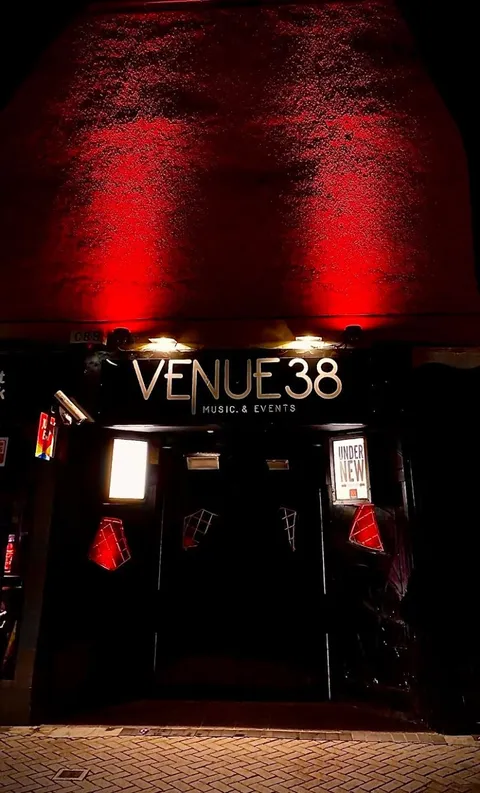
- Venue38
- The Tranquil Turtle
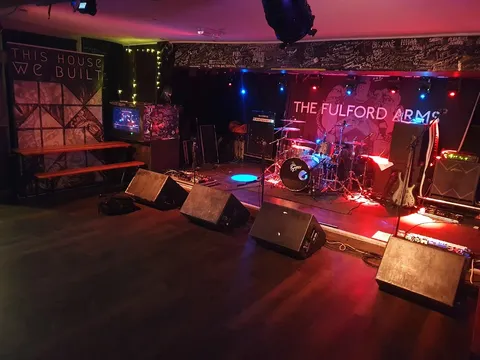
- The Fulford Arms
- The King Arthur
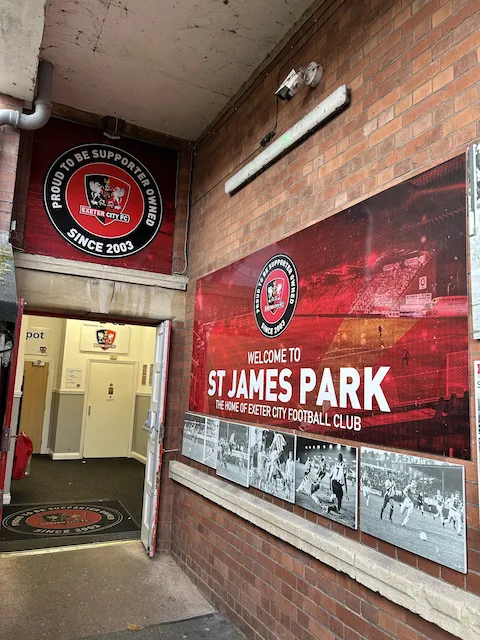
- St James Park
- Firebug
- Nicholas Chamberlaine School
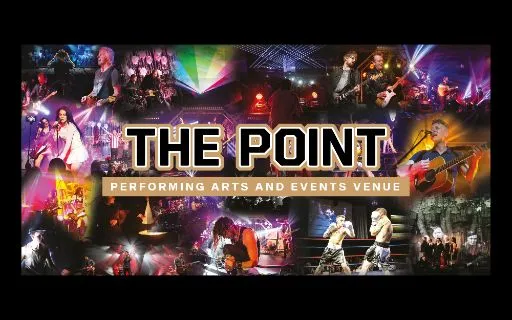
- The Point Events Venue
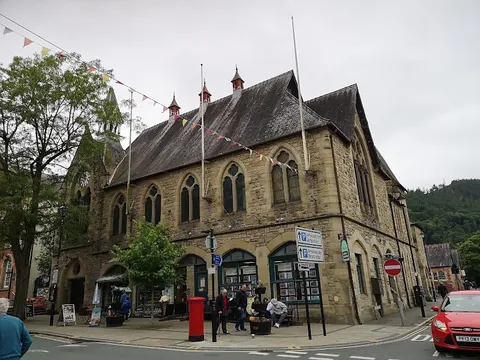
- Llangollen Town Hall
- Kettering Rugby Football Club
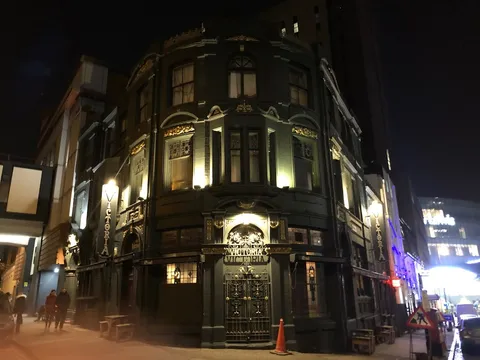
- The Victoria Birmingham
- Trillians Rock Bar
- The White Lion
- Barnaby's Lounge
- Bird in Hand Pub
Scroll to zoom (hold Ctrl / two fingers)· tap a layer to switch · click a pin for details, a cluster for its area.
Booking in a city? London · Birmingham · Leeds · Glasgow · Sheffield · Manchester · Bradford · Edinburgh · Liverpool · Bristol · Leicester · Cardiff · every city guide · the UK venue directory
Does a bar need a licence for a DJ? In England and Wales a bar licensed to sell alcohol for drinking there needs no entertainment licence for live or recorded music between 8am and 11pm, for an audience of 500 or fewer, while open for those sales and unless a licence review has removed the exemption (GOV.UK Live Music Act guidance). Music after 11pm normally needs authorisation through the premises licence or an eligible TEN, and playing music in public normally needs TheMusicLicence from PPL PRS for the music it represents.
| England and Wales · GOV.UKDJs and bands, 8am to 11pmLive music and recorded music, which covers a DJ, need no entertainment licence between 8am and 11pm for an audience of 500 or fewer, on premises licensed to sell alcohol for drinking there while open for those sales, unless a licence review has removed the exemption. | |
| England and Wales · GOV.UKAfter 11pm: on your licenceMusic between 11pm and 8am normally needs authorisation. A TEN can cover an eligible event with fewer than 500 people, including staff. Amplified live or recorded music for an audience over 500 normally needs a premises licence. | |
| UK · PPL PRSYou still need TheMusicLicenceThat is permission to hold the event, not copyright. Playing or performing music in public needs a music licence from PPL PRS. | |
| England and Wales · GOV.UKLate night refreshmentHot food or hot drinks sold to the public between 11pm and 5am is late night refreshment, which normally needs authorisation, subject to exemptions such as a hot drink containing alcohol. | |
| England and Wales · GOV.UKOne-off events: a TENFor an event outside your licence: fewer than 500 people at all times, including staff, up to 7 days. Give the council at least 10 clear working days' notice (a late TEN: 5). One premises can have up to 15 a year, 21 days in total. | |
| England and Wales · GOV.UKKeep the neighbours on sideYour council can act if noise becomes a statutory nuisance. Agree finish times and volume with the act in the contract. | |
| UK · GOV.UKMartyn's Law: expected in spring 2027The 2025 Act covers premises where 200 to 799 people may be present at the same time, staff included (standard tier), or 800 and over (enhanced). Count people, not seats: a bar or club that meets the premises criteria at 200 or more is in scope. A public event with entry checks where 800 or more people are expected at once is in scope too, unless it is held at premises already in the enhanced tier. The SIA expects the duties to start in spring 2027 and will confirm the date. |
| Scotland and NILicensing (Scotland) Act 2005Scotland and Northern Ireland have their own licensing law - check with your council. | |
| ToolLicensing checkerTen questions, a plain-English verdict. |
| DJ residencyThe same DJ on the same night each week. Hear their mixes first and agree set times, decks and the finish in the contract. | |
| Sax over the DJA sax player or percussionist playing live over the DJ lifts a busy hour. Agree who leads and the feed into the mixer. | |
| Band, then DJA party band early in the evening, then the DJ until close. Book both for the same date and agree the changeover. | |
| Promoter club nightAn outside promoter brings the crowd and the line-up; you agree the door deal and the finish time. |
The four things that change when the music runs past 11pm. Each one is a rule a late bar or club meets on every late night, with the official page it comes from.
| Your licence must cover itLive or recorded music after 11pm is regulated entertainment in England and Wales, so your premises licence or a TEN must cover the hours, unless another exemption applies. Nightclubs are named in the guidance. | |
| Late night refreshmentHot food or hot drinks sold to the public between 11pm and 5am is late night refreshment, which normally needs authorisation, subject to exemptions such as a hot drink containing alcohol. | |
| Door supervisorsPaid door supervisors at licensed premises need an SIA licence authorising door supervision, whether employed directly or contracted. Your premises licence may also require door supervisors at set times, so check its conditions before a big night. | |
| Volume and limitersSound limiters, the switch at 11pm and what to do when a neighbour complains - set the level in the contract. |
How a night pays for its music, from a bar’s own DJ to a promoter’s club night. Settle the deal before the date goes on the poster.
| Flat fee or door splitA guarantee, a share of the door, or the greater of the two. Break-even is your fixed costs divided by what each ticket brings in after variable costs and the door split, rounded up. | |
| A residencyThe same night each week or month builds a crowd. Agree the run of dates and the fee in the chat, with a contract on each booking. | |
| Working with a promoterHanding a night to an outside promoter: who books the DJs, who takes the door and when the music stops. | |
| Pub-style bookingsAcoustic sets, weekend bands and open mics for a pub or daytime bar have their own page, with the same live fees. |
| Hear the real thingAudio, video and two-way reviews on profiles, where the act has added them - venues review acts and acts review venues. | |
| Find acts by soundSearch by the sound your crowd wants after dark - function, covers, pop, dance, or DJs by style. | |
| Ask about coverMany venues ask acts for public liability insurance. Musicians’ Union members are covered to £10 million each with their membership. | |
| Agree the kitWho brings the PA, the stage space and the power - written into the contract so nobody guesses on the night. |
| Musicians' UnionNational gig rates | |
| Night Time Industries AssociationThe trade body for bars, clubs and late venues | |
| UKHospitalityThe trade body for UK hospitality | |
| Security Industry AuthorityLicenses door supervisors | |
| Music Venue TrustThe charity for grassroots venues |




| BookingPost a GigArtists apply to you | |
| CoverGX Gig RescueFill a dropout, fast | |
| ComplianceLicensing CheckerMusic licences, decoded | |
| ComplianceCompliance ChecklistEvery duty, one board | |
| ComplianceMartyn's Law ReadinessReady before 2027 | |
| PromotionEvents PosterYour what’s-on, in one click | |
| DiscoveryFind an ArtistRanked acts for your dates | |
| OutreachAct outreach templatesReady-to-send messages for approaching acts. |
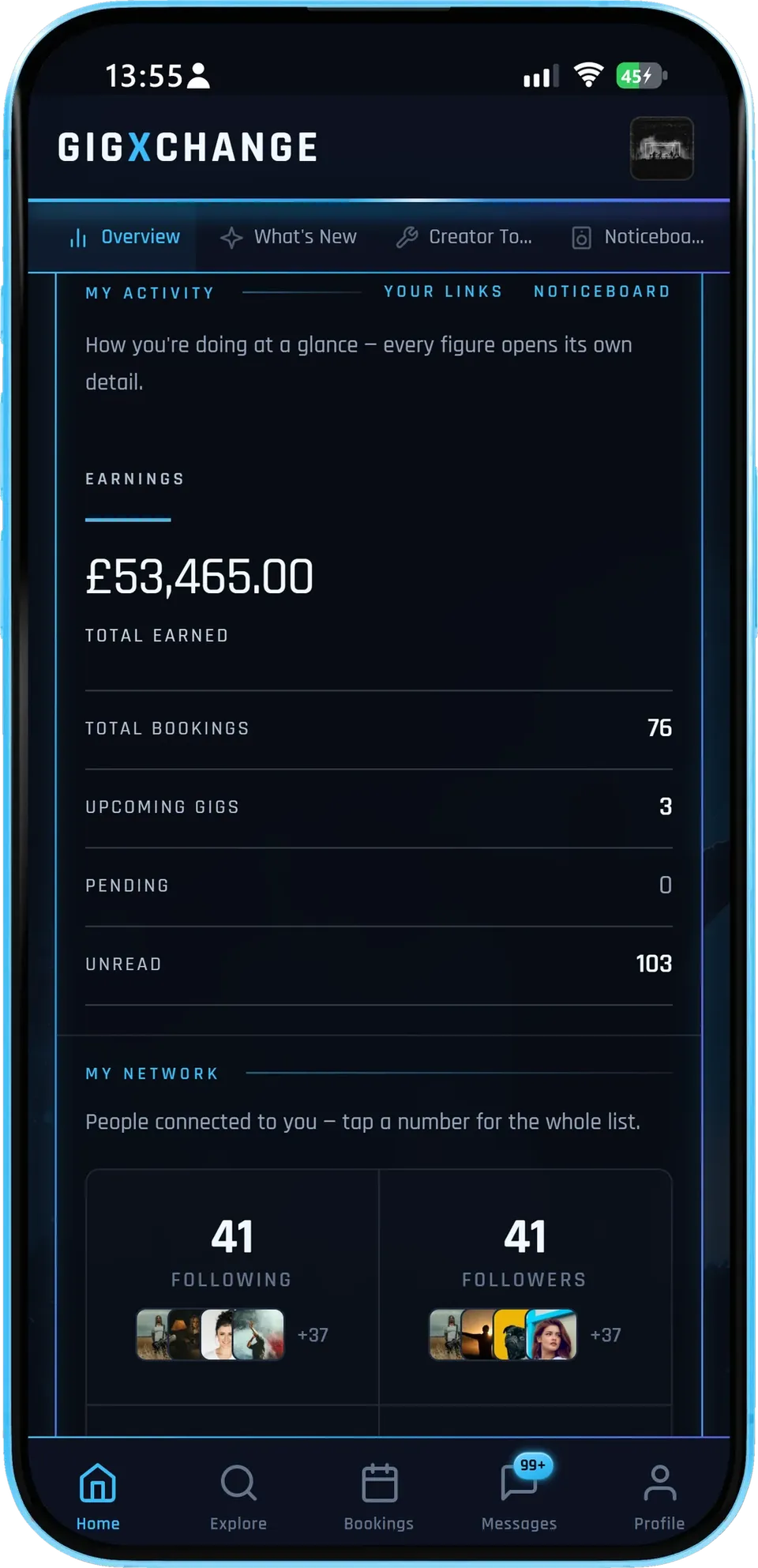
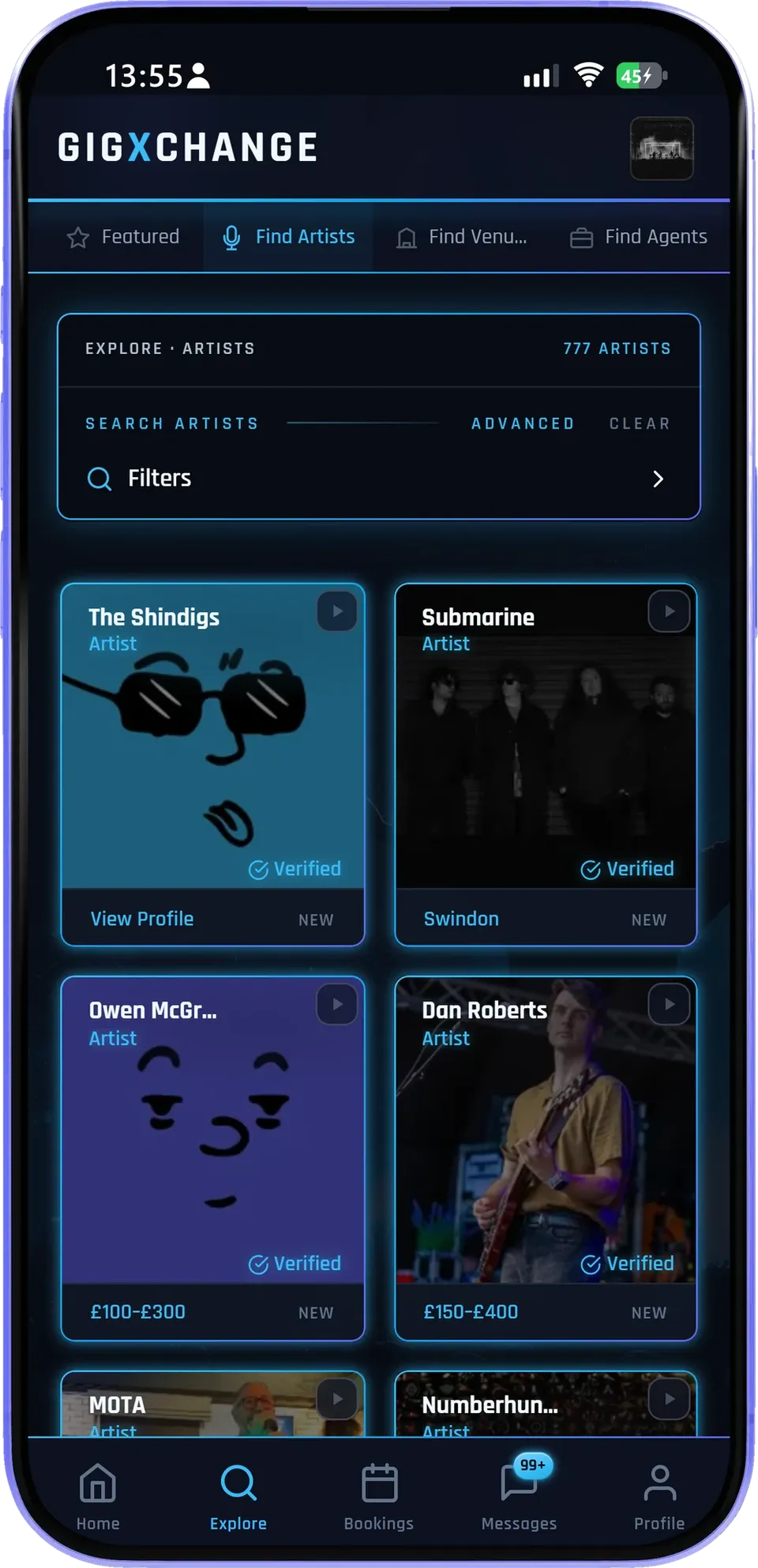
A look inside GigXchange Mainstage, the members app your bar books in: find the acts, agree the date and fee in the chat, track every booking. Scroll: the phone follows you through the app.
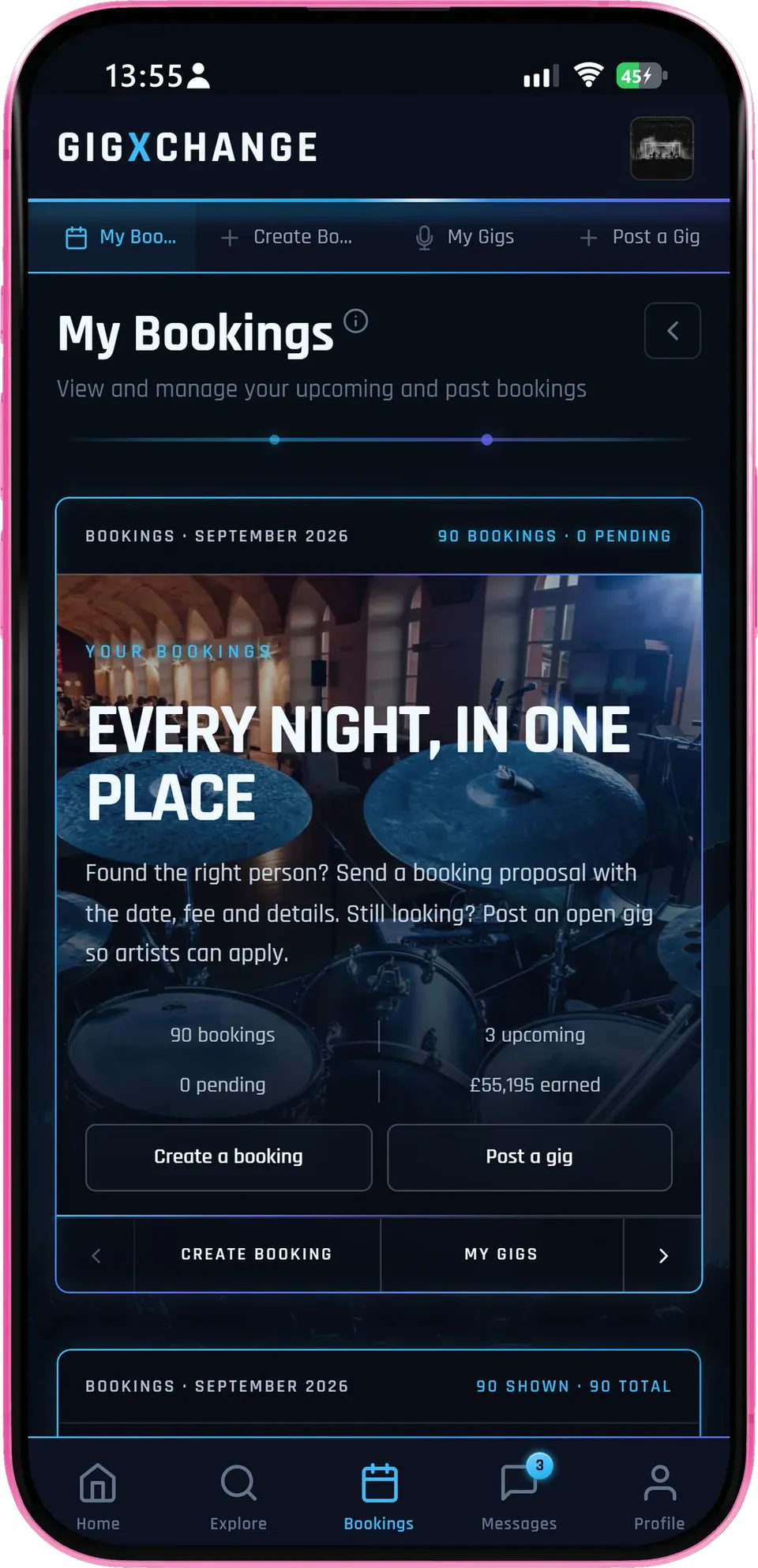
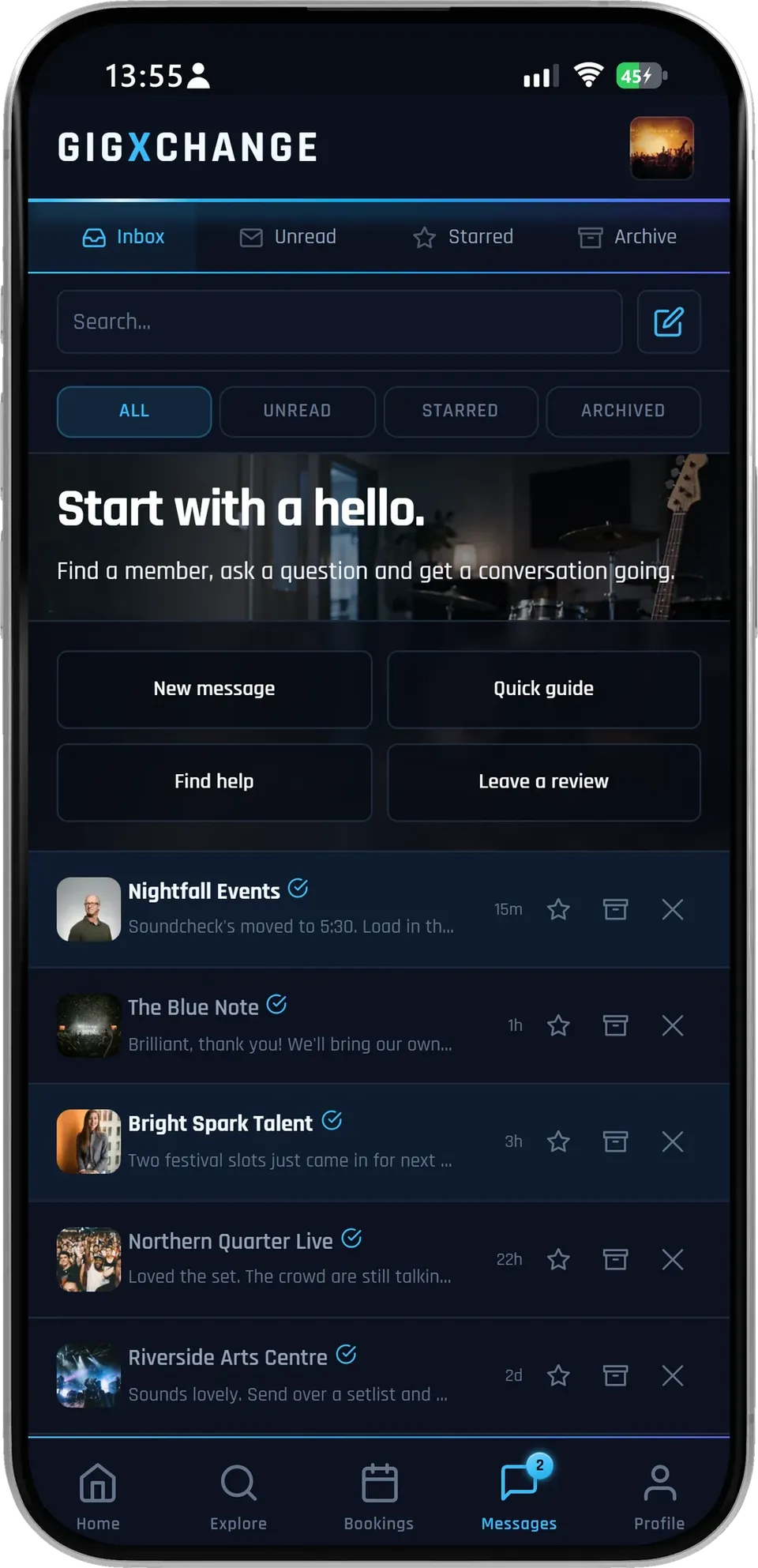
- 01 / 04 Your dashboard
The moment you log in, everything that matters is in front of you — what's booked, what you've earned, and what needs you next. No digging through tabs.
- Bookings at a glanceConfirmed, pending and upcoming gigs in one view — so nothing slips through the cracks.
- Earnings, trackedSee deposits held securely and payouts released, with a running total you can trust.
- Live activity feedNew messages, offers and event updates surface the second they happen — you're never the last to know.
- 02 / 04 Explore the scene
Find the right artists, venues and open gigs across the UK from one place — filtered by what actually matters to you: location, genre, date and budget.
- Search that fits youFilter by role, city, genre and availability to surface only the people and gigs worth your time.
- Smart Match suggestionsThe strongest matches rise to the top, so the right connection finds you — not just the loudest.
- Open gigs, liveBrowse gigs that need filling and apply in a tap — no cold outreach, no gatekeepers.
- 03 / 04 Bookings, end to end
Offer, negotiate and confirm a gig in a single thread — every date, fee and deposit agreed in one place and held to.
- One thread, start to finishThe whole deal lives in one conversation — no lost emails, no he-said-she-said.
- Negotiate with clarityCounter-offers, dates and fees are structured and tracked, so both sides always know where they stand.
- Held securelyThe deposit is held safely until the gig is done — performers get paid, bookers get peace of mind.
- 04 / 04 Messaging
Agree the details before you commit. Direct, real-time conversations with venues, artists, agents and promoters — with bookings built right in.
- Talk first, book secondSort the awkward questions — sound, timings, fee — before anything's signed.
- Bookings inside the chatTurn a conversation into a confirmed offer without ever leaving the thread.
- Share availability & filesSend your calendar, riders and posters in-line, so everyone's working from the same page.
- 01 / 04
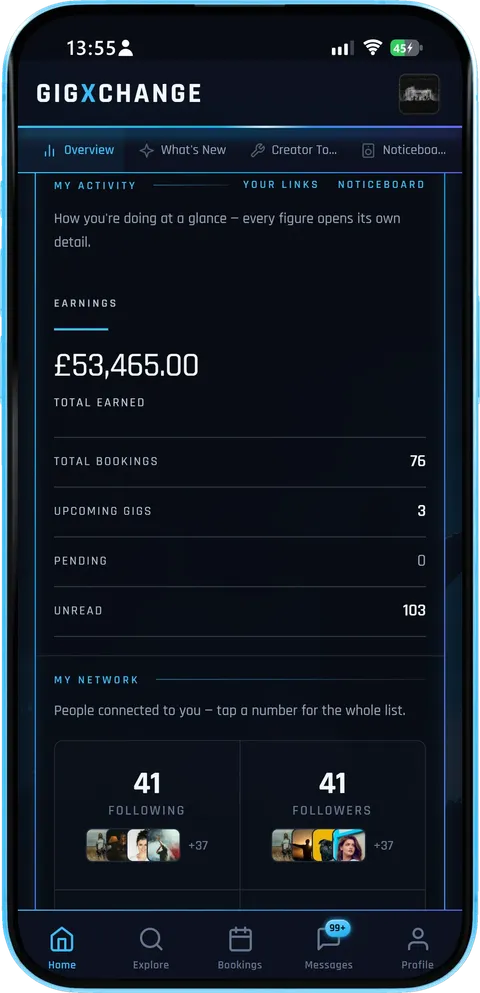 Your dashboard
The moment you log in, everything that matters is in front of you — what's booked, what you've earned, and what needs you next. No digging through tabs.
- Bookings at a glanceConfirmed, pending and upcoming gigs in one view — so nothing slips through the cracks.
- Earnings, trackedSee deposits held securely and payouts released, with a running total you can trust.
- Live activity feedNew messages, offers and event updates surface the second they happen — you're never the last to know.
- 02 / 04
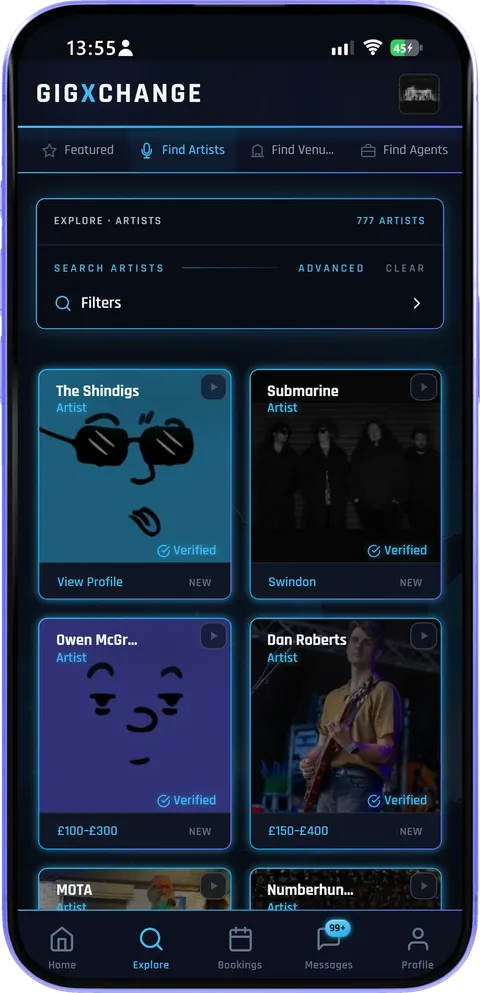 Explore the scene
Find the right artists, venues and open gigs across the UK from one place — filtered by what actually matters to you: location, genre, date and budget.
- Search that fits youFilter by role, city, genre and availability to surface only the people and gigs worth your time.
- Smart Match suggestionsThe strongest matches rise to the top, so the right connection finds you — not just the loudest.
- Open gigs, liveBrowse gigs that need filling and apply in a tap — no cold outreach, no gatekeepers.
- 03 / 04
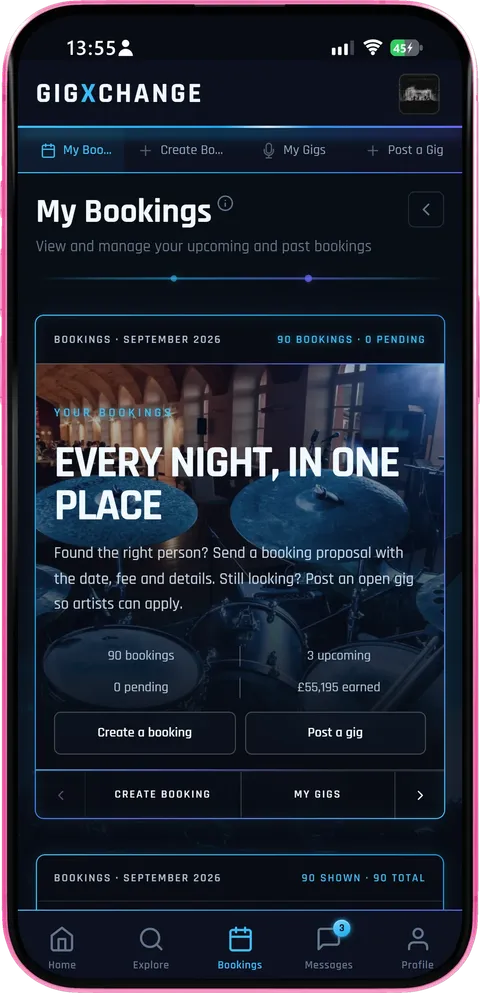 Bookings, end to end
Offer, negotiate and confirm a gig in a single thread — every date, fee and deposit agreed in one place and held to.
- One thread, start to finishThe whole deal lives in one conversation — no lost emails, no he-said-she-said.
- Negotiate with clarityCounter-offers, dates and fees are structured and tracked, so both sides always know where they stand.
- Held securelyThe deposit is held safely until the gig is done — performers get paid, bookers get peace of mind.
- 04 / 04
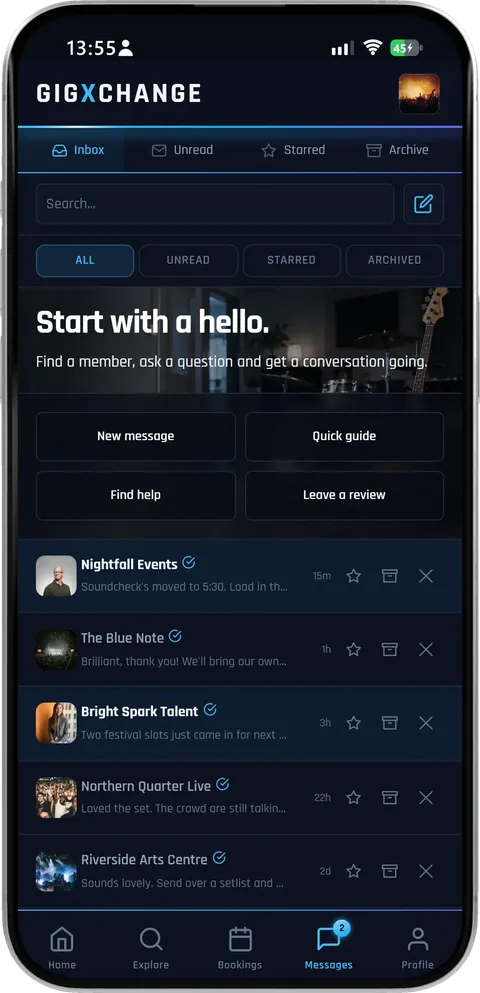 Messaging
Agree the details before you commit. Direct, real-time conversations with venues, artists, agents and promoters — with bookings built right in.
- Talk first, book secondSort the awkward questions — sound, timings, fee — before anything's signed.
- Bookings inside the chatTurn a conversation into a confirmed offer without ever leaving the thread.
- Share availability & filesSend your calendar, riders and posters in-line, so everyone's working from the same page.
| Live Music for PubsPub fees and the licence rules. | |
| Live Music for RestaurantsDinner-set fees, the volume and the licence rules. | |
| Live Music for HotelsBar, wedding and corporate fees, and the rules. | |
| Live Music for Care HomesDaytime formats and the licence rules. | |
| Live Music for ClubsClub nights and the certificate rules. | |
| Live Music for Holiday ParksSeason bookings and the rules. | |
| Live Music for BoatsSailings, sets and the rules. | |
| Live Music for Stadiums & ArenasMatch-day and hospitality fees, and the rules. | |
| What a DJ costsUK DJ fees, set lengths and what to agree. | |
| How much gigs payUK gig fees by venue type and act. | |
| Noise rules and sound limitersThe 11pm switch, limiters and complaints. | |
| Live music licences in depthPRS costs and the exemptions explained. | |
| Promote your nightFill the room the week before. | |
| GX Index ratesLive UK gig fees by venue type and act size. | |
| Find an artistSearch DJs and acts by sound, place and date. | |
| GigXchange for venuesEverything a venue account does. |
| How cancellations work | |
| The booking fee |

Live music for your bar or nightclub
Book DJs, live acts and sax or percussion over DJ sets for your late bar or nightclub direct. Live UK pub and bar fees, the rules after 11pm, a contract every time.













Last updated: 9 November 2026
Where Bars and Clubs Book DJs & Live Music
GIGXCHANGE is where a UK late bar or nightclub can book DJs and live music direct. 1,061 artists and 77 venues across 80 cities are on the platform, from DJs and saxophonists to party bands. A bar or club posts its date free, checks each act’s recordings where available before enquiring, agrees the fee in the chat and signs a contract on every booking. On the live GX Index a solo act at UK pubs and bars is typically £260 (729 fees) and a 3 to 4 piece band £350 (488 fees). The booking fee is 5% on top only when you pay through GigXchange – 0% when you settle privately.
A late bar or nightclub books its DJs and acts for nights that run past 11pm. Agree the fee, timings and equipment in writing: the set times, who brings the decks and sound, and the finish your licence allows.
After dark the stakes are higher than in a daytime pub. Music after 11pm normally needs authorisation through the premises licence or an eligible TEN, the door has to be right, and a club night has to earn back the DJ’s fee at the till or on the door.
On GigXchange the manager can hear the DJ or act before booking, where the profile includes recordings. The fee, the set times and the kit go into a contract both sides sign, and GX Gig Rescue sends an urgent invite to available acts nearby if someone drops out. The live GX Index shows what UK pubs and bars pay, so the budget comes from data.
Book live music in five steps
From an empty date to a signed booking, without an agency. The full walkthrough is the booking journey. Each step below says what you do, what the act does and what is agreed in writing.
Post your gig, free
Add the date, your budget, the genres you want and your house kit in about two minutes. Acts apply to you - or browse and invite them yourself.
Hear them before you book
Act profiles carry the audio, video and reviews the act has added, so you can judge them before you ask.
Agree it in the chat
Message the act directly, settle the fee, sets and kit, and the offer lands in the same thread.
Sign the contract
Every booking makes a digital performance agreement, signed by both of you, with a full audit trail.
Pay the act
5% on top only when you pay through GigXchange – 0% when you settle privately. A protected payment holds the deposit with Stripe and releases it after the gig.
If the act drops out
GX Gig Rescue sends an urgent invite to available acts near you. The first to accept is booked.
Pub and bar fees, live
Median UK pub and bar fees in the GX Index - it does not yet split out DJs or nightclubs. Marker: the Musicians’ Union recommended minimum for pubs and clubs (up to 3 hours, per musician, April 2026).
What does live music cost a UK bar? In the GX Index the median pub and bar fee is £260 (729 fees) for a solo act, £325 (122 fees) for a duo, £350 (488 fees) for a 3 to 4 piece band and £525 (395 fees) for a 5+ piece.
- Solo act £260 median · 729 observationsThe MU publishes no solo figure
- Duo £325 median · 122 observationsMU minimum £334.32
- 3 to 4 piece band £350 median · 488 observationsMU minimum £501.48 · for 3 players; 4 players: £668.64
- 5+ piece band £525 median · 395 observationsMU minimum £835.80
You pay the act’s fee. 5% on top only when you pay through GigXchange – 0% when you settle privately. How much gigs pay · Work out a fee for your bar · Every GX Index fee table · The Musicians’ Union national gig rates
Find Your Act
Every act on GigXchange, in one place. Pick a date to see who is free, then ask up to six at once - no sign-up first.
Venues that host live music
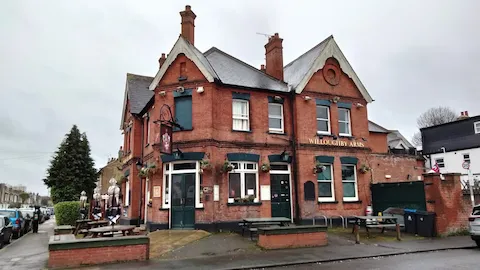
77 venues are on GigXchange across the UK. Joining is free: list your bar or club, post a gig and message DJs and acts at no cost. 5% on top only when you pay through GigXchange – 0% when you settle privately, and every booking comes with a contract you both sign. Where can a bar or nightclub book DJs and live music in the UK? On GigXchange, a venue posts its date free, hears the DJs and acts and books one direct, with live UK pub and bar fees from the GX Index to set the budget.







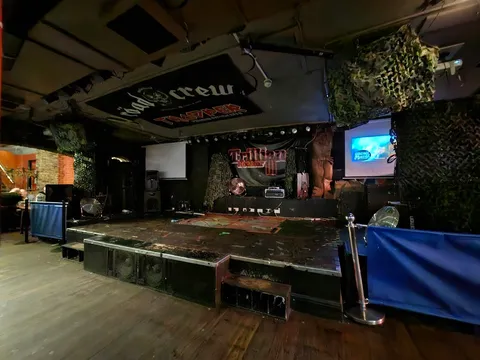

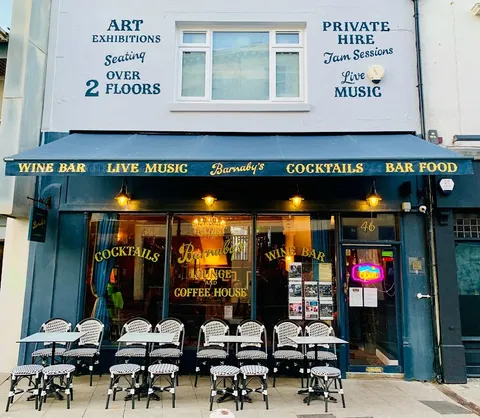
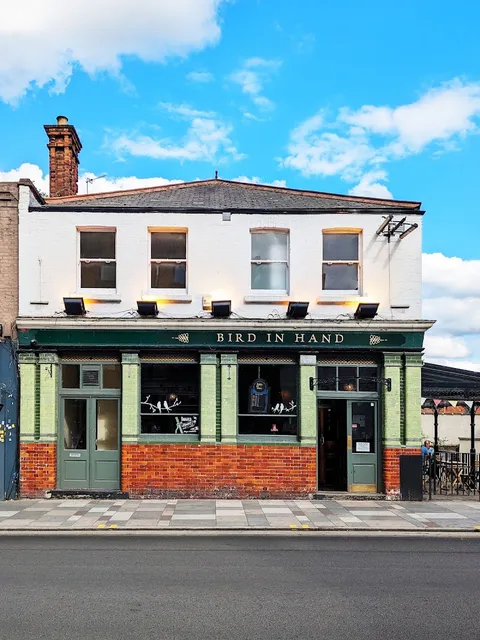
Browse the UK venue directory · What a venue account does · List your bar free




Members across the UK
Artists, venues, agents and promoters on GigXchange, by city - the acts you can book near your bar. Tap a city to see the acts, venues and agents listed there today.
Scroll to zoom (hold Ctrl / two fingers)· tap a layer to switch · click a pin for details, a cluster for its area.
Booking live music in a city? London · Birmingham · Leeds · Glasgow · Sheffield · Manchester · Bradford · Edinburgh · Liverpool · Bristol · Leicester · Cardiff · every city guide
The licence rules
The rules a late bar or nightclub actually meets, each with the official page it comes from: when music needs no extra permission, what changes after 11pm, and the duties that come with a bigger room. Checked 7 November 2026.
Does a bar need a licence for a DJ? In England and Wales a bar licensed to sell alcohol for drinking there needs no entertainment licence for live or recorded music between 8am and 11pm, for an audience of 500 or fewer, while open for those sales and unless a licence review has removed the exemption (GOV.UK Live Music Act guidance). Music after 11pm normally needs authorisation through the premises licence or an eligible TEN, and playing music in public normally needs TheMusicLicence from PPL PRS for the music it represents.
Scotland and Northern Ireland have their own licensing law - check with your council. Licensing (Scotland) Act 2005. Not sure which applies? Licensing checker · Compliance checklist · Martyn’s Law check
Nights after dark
Four ways late bars and nightclubs use DJs and live acts. Start with the one that fits your room and your licence, then build the night up week by week.
DJ residency
The same DJ on the same night each week. Hear their mixes first and agree set times, decks and the finish in the contract.
Sax over the DJ
A sax player or percussionist playing live over the DJ lifts a busy hour. Agree who leads and the feed into the mixer.
Band, then DJ
A party band early in the evening, then the DJ until close. Book both for the same date and agree the changeover.
Promoter club night
An outside promoter brings the crowd and the line-up; you agree the door deal and the finish time.
Music after 11pm
The four things that change when the music runs past 11pm. Each one is a rule a late bar or club meets on every late night, with the official page it comes from.
Club-night money
How a night pays for its music, from a bar’s own DJ to a promoter’s club night. Settle the deal before the date goes on the poster.
Choosing the right act
What to check before you book, so the night goes the way you planned: hear them first, search by the sound your room suits, ask about insurance cover and agree who brings the kit.
The organisations behind late-night music: Musicians' Union · Night Time Industries Association · UKHospitality · Security Industry Authority · Music Venue Trust
Free tools for your bar
Free with a venue account: the fee calculator, the contract generator and the poster tools venues use to plan a night and fill the room, with no card on file.
Post a Gig
List an open slot in two minutes — genres, budget, house kit — and take applications from gig-ready artists with verified reviews attached.
GX Gig Rescue
Broadcast an urgent booking invite to up to 25 available acts near you — last-minute specialists first, first to accept is booked.
Licensing Checker
Ten plain-English questions produce a two-part verdict — permission and copyright — with an indicative cost and official gov.uk / PPL PRS sources.
Compliance Checklist
Eight questions build a checklist of only the duties your venue owes — ten areas, law first, every item linked to its official source, PDF export.
Martyn's Law Readiness
The 2025 Act reaches every 200+ venue from ~2027. Six questions give your tier, your duties as a tickable list, and a first-draft procedures PDF.
Events Poster
Your upcoming programme becomes a designed poster — ticket QRs on every listing, status badges, your branding. Print, post or publish to your profile.
Find an Artist
Pick the empty date, set a 60-second brief, and invite up to 5 ranked best-fit acts — fit scores, fee bands and kit tags attached.
Also free: a booking contract generator · a gig rate calculator · act outreach templates
See it in action
A look inside GigXchange Mainstage, the members app your bar books in: find the acts, agree the date and fee in the chat, track every booking. Scroll: the phone follows you through the app.
- 01 / 04
Your dashboard
The moment you log in, everything that matters is in front of you — what's booked, what you've earned, and what needs you next. No digging through tabs.
- Bookings at a glanceConfirmed, pending and upcoming gigs in one view — so nothing slips through the cracks.
- Earnings, trackedSee deposits held securely and payouts released, with a running total you can trust.
- Live activity feedNew messages, offers and event updates surface the second they happen — you're never the last to know.
- 02 / 04
Explore the scene
Find the right artists, venues and open gigs across the UK from one place — filtered by what actually matters to you: location, genre, date and budget.
- Search that fits youFilter by role, city, genre and availability to surface only the people and gigs worth your time.
- Smart Match suggestionsThe strongest matches rise to the top, so the right connection finds you — not just the loudest.
- Open gigs, liveBrowse gigs that need filling and apply in a tap — no cold outreach, no gatekeepers.
- 03 / 04
Bookings, end to end
Offer, negotiate and confirm a gig in a single thread — every date, fee and deposit agreed in one place and held to.
- One thread, start to finishThe whole deal lives in one conversation — no lost emails, no he-said-she-said.
- Negotiate with clarityCounter-offers, dates and fees are structured and tracked, so both sides always know where they stand.
- Held securelyThe deposit is held safely until the gig is done — performers get paid, bookers get peace of mind.
- 04 / 04
Messaging
Agree the details before you commit. Direct, real-time conversations with venues, artists, agents and promoters — with bookings built right in.
- Talk first, book secondSort the awkward questions — sound, timings, fee — before anything's signed.
- Bookings inside the chatTurn a conversation into a confirmed offer without ever leaving the thread.
- Share availability & filesSend your calendar, riders and posters in-line, so everyone's working from the same page.
Live music for bars & nightclubs FAQ
What bar and club managers ask before they book.
More answers: How cancellations work · The booking fee · GX Gig Rescue · Licensing checker
Your next night, booked
Post a gig free and book the act direct. Acts reply in the app, you compare them side by side, and the contract and deposit are handled in the same place.