Free tool · For venues
Ten plain-English questions about your venue and GigXchange tells you which music licences you actually need — permission to stage it, copyright to play it, and roughly what it costs. Every answer linked to the official source.
Updated 14 November 2026
GIGXCHANGE Licence Checker is a free tool that tells a UK venue which music licences it needs, in ten plain-English questions. Most venues have two separate questions to answer. Permission: do you need a premises licence, a Temporary Event Notice or nothing at all to put the music on? In England and Wales, live music between 8am and 11pm for an audience of 500 or fewer at a venue licensed to sell alcohol usually needs no entertainment permission under the Live Music Act. Copyright: playing other people's songs, live or recorded, almost always needs TheMusicLicence from PPL PRS. The checker answers both for your venue, gives an indicative PRS cost and links each answer to gov.uk, legislation.gov.uk or PPL PRS.
It covers England and Wales, Scotland and Northern Ireland, and you can try it here without signing up. The worked example below runs three example venues through it, so you can see the verdict before you answer a question.
| 03Walk the checkerThe real app, screen by screen | |
| 04How it worksFrom first question to action plan | |
| 05Worked exampleThree example venues, explained | |
| 06Everything in the checkerVerdicts, costs and official sources | |
| 08The two licences venues mix upPermission and copyright, side by side | |
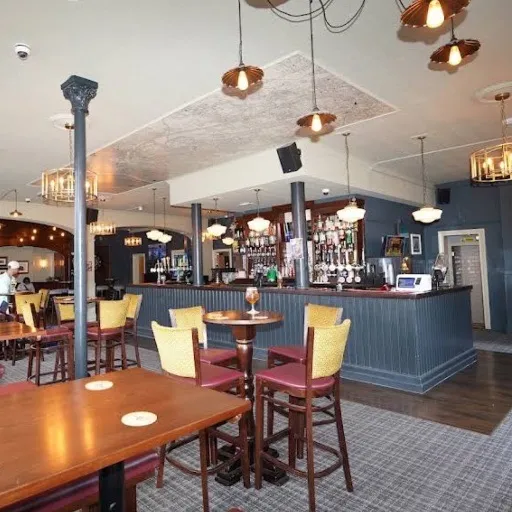
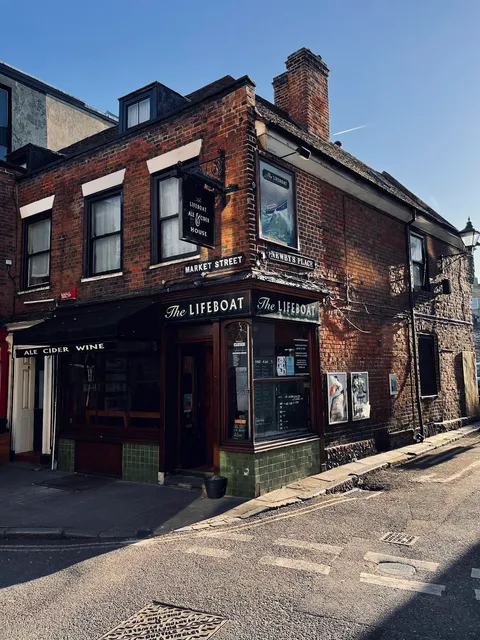
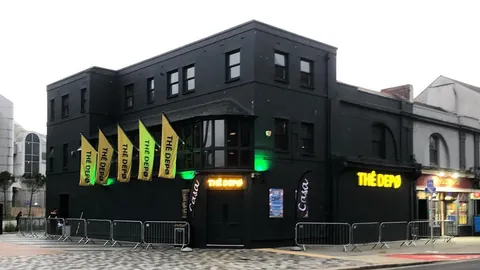
| 09Venues already on GigXchangeReal venue profiles, open any one | |
| 10More free tools for venuesOther free tools for venues | |
| 11Frequently asked questionsLive Music Act, TENs and PRS costs |
The real Licence Checker in the GigXchange app, step by step: from ten plain questions about your venue and your nights to a verdict on which licences you need, with the official sources linked.
Music licensing confuses venues because it is two separate questions answered by two separate bodies. Permission to stage live music is entertainment licensing, run by your council and largely switched off for small licensed venues by the Live Music Act 2012. Copyright to play the music is TheMusicLicence from PPL PRS, which applies UK-wide whatever the permission answer.
The Licence Checker answers both in one pass, and you can try it right here on the website with no account - tap Try it now. Below is the real thing in the app, screen by screen, for a pub in England and Wales putting on amplified live music for up to 100 people as a one-off that runs past 11pm - exactly the case where the answer is a Temporary Event Notice plus TheMusicLicence.
- 01 / 03 Ten questions
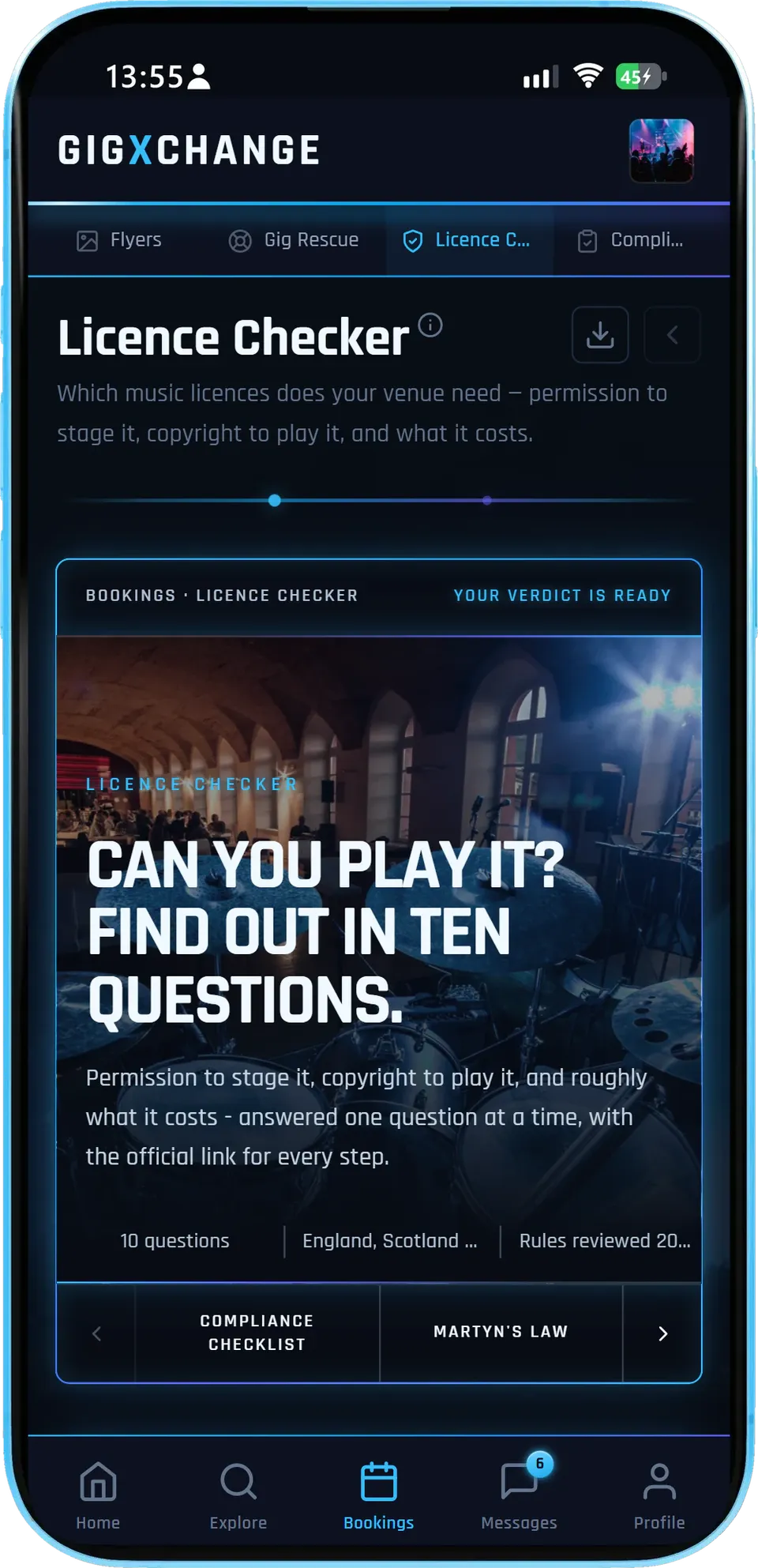
Where you are, what music you have, how many people, what hours and whether you sell alcohol - one plain-English question at a time.
- One at a timeEach question is a tap, so the whole set takes a couple of minutes.
- Nation firstEngland and Wales, Scotland and Northern Ireland each get their own rules.
- Saved to your venueYour answers stay on your venue account, ready for next time.
The first question is where you are, because the rules split by nation: the Live Music Act exemption is England-and-Wales law, Scotland's entertainment licences come from local councils and Northern Ireland's from district councils.
- 02 / 03 Your venue, then your verdict
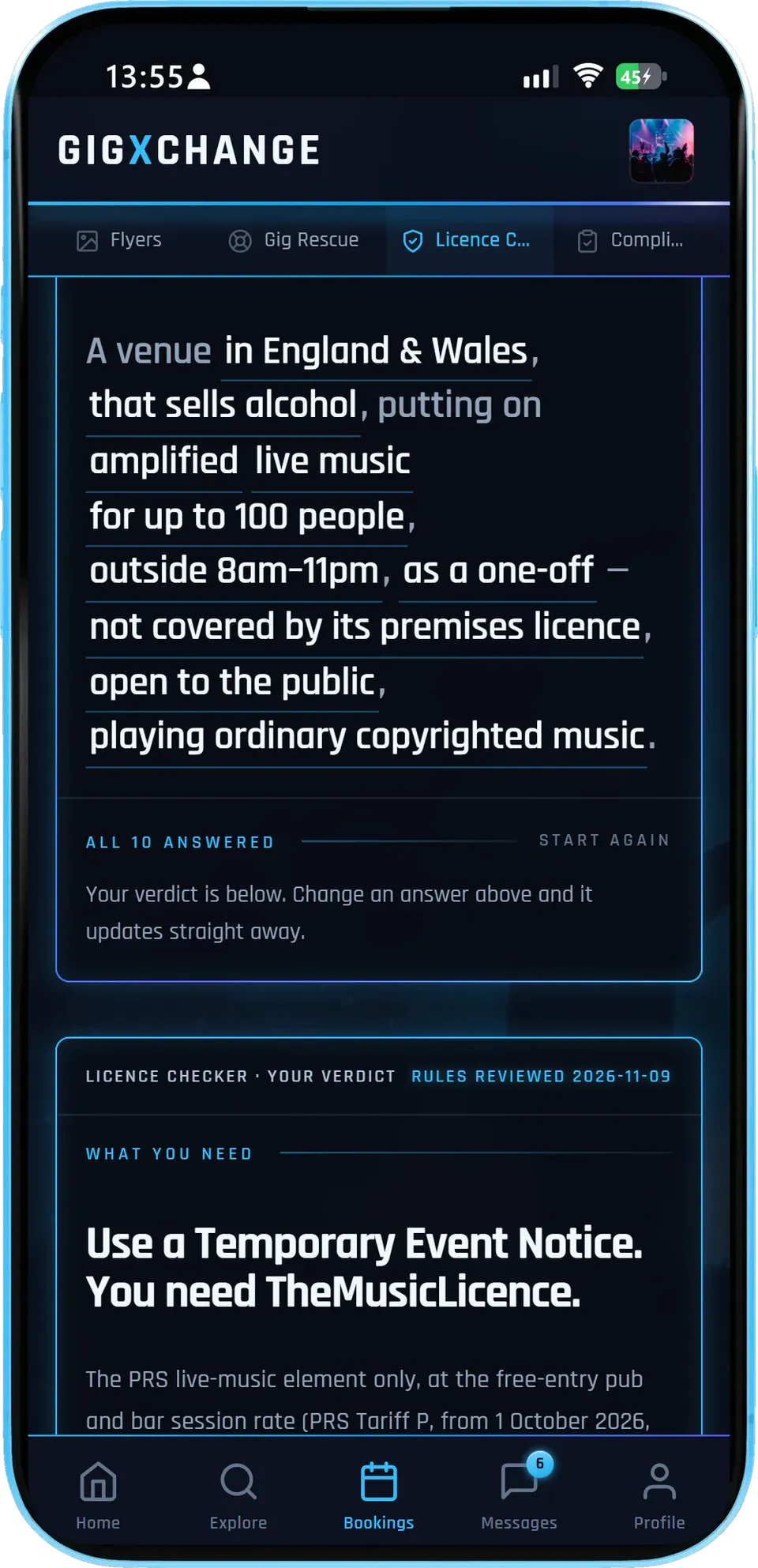
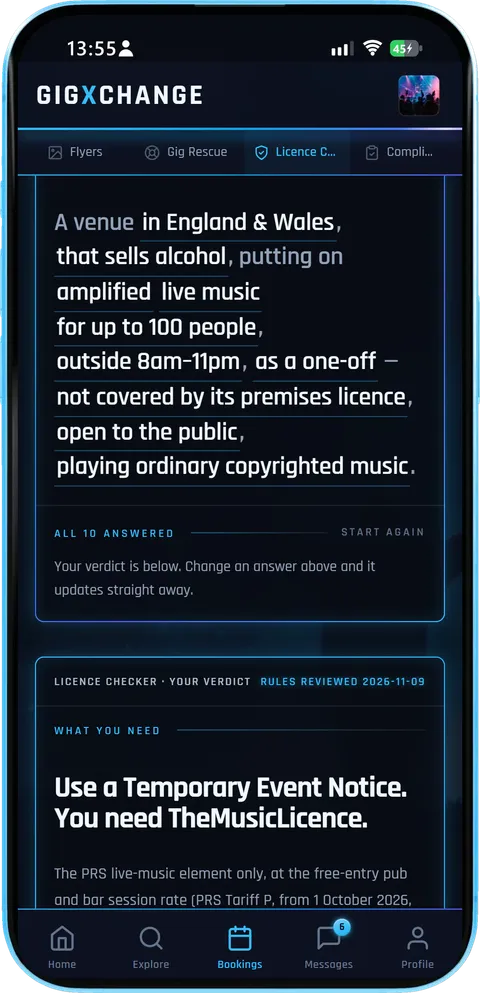
Your answers read back as one sentence you can tap to change, and the verdict lands straight under it.
- Tap to editEach part of the sentence is a live answer - change one and the verdict updates.
- Two verdictsPermission to stage it and copyright to play it, answered separately.
- Plain wordsWhat you need, said the way you would say it.
This pub's one-off for up to 100 people runs past 11pm, outside the Live Music Act hours, so none of the exemptions fits its answers: the verdict is a Temporary Event Notice for permission, plus TheMusicLicence for the music itself.
- 03 / 03 Every source, one list
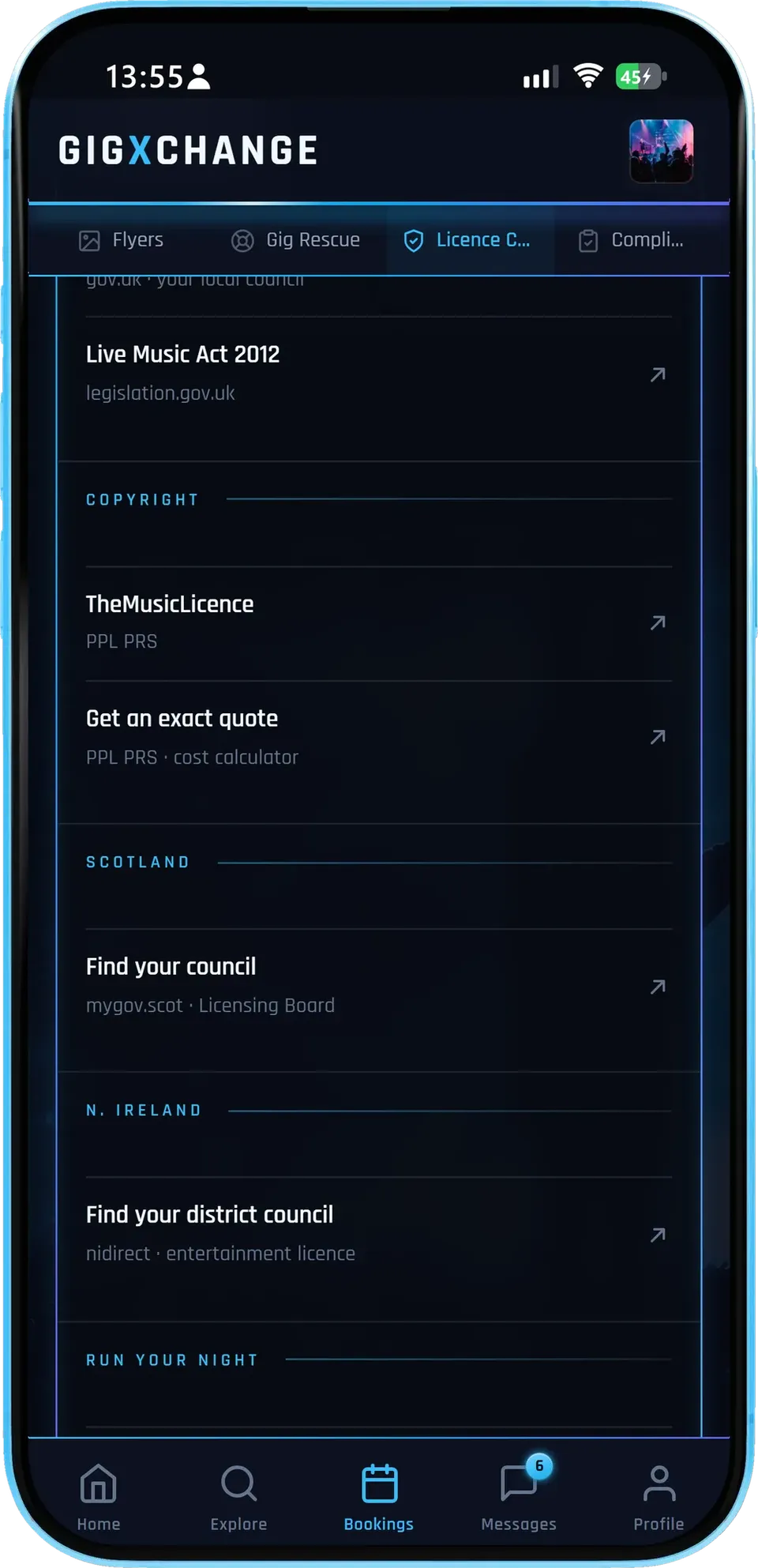
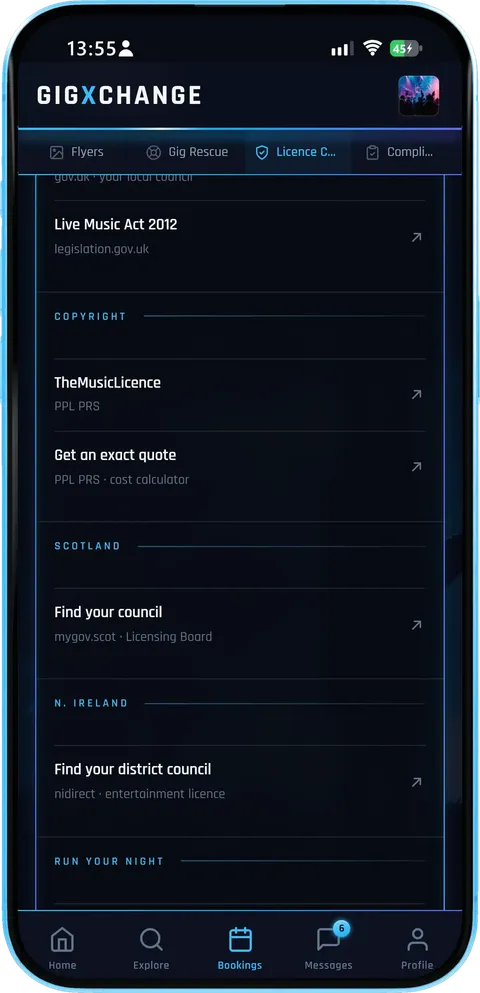
The official pages behind your verdict in one place - the music licensing overview, Temporary Event Notices, premises licences, the Live Music Act 2012, TheMusicLicence and the PPL PRS calculator.
- Deep linksStraight to the page that answers the question, not a homepage.
- Scotland and Northern IrelandTheir own council and licensing routes, listed separately.
- Noise tooHow councils handle noise, for the night itself.
Ten links sit behind this verdict, each opening the page that answers the question - the law itself on legislation.gov.uk, the process on gov.uk and the price on PPL PRS.
- 01 / 03
 Ten questions
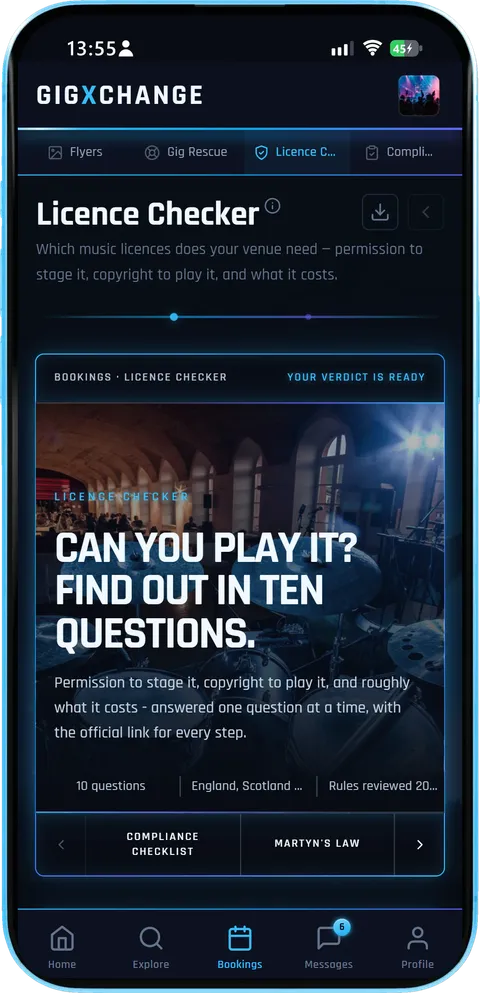
Where you are, what music you have, how many people, what hours and whether you sell alcohol - one plain-English question at a time.
- One at a timeEach question is a tap, so the whole set takes a couple of minutes.
- Nation firstEngland and Wales, Scotland and Northern Ireland each get their own rules.
- Saved to your venueYour answers stay on your venue account, ready for next time.
The first question is where you are, because the rules split by nation: the Live Music Act exemption is England-and-Wales law, Scotland's entertainment licences come from local councils and Northern Ireland's from district councils.
- 02 / 03
 Your venue, then your verdict
Your answers read back as one sentence you can tap to change, and the verdict lands straight under it.
- Tap to editEach part of the sentence is a live answer - change one and the verdict updates.
- Two verdictsPermission to stage it and copyright to play it, answered separately.
- Plain wordsWhat you need, said the way you would say it.
This pub's one-off for up to 100 people runs past 11pm, outside the Live Music Act hours, so none of the exemptions fits its answers: the verdict is a Temporary Event Notice for permission, plus TheMusicLicence for the music itself.
- 03 / 03
 Every source, one list
The official pages behind your verdict in one place - the music licensing overview, Temporary Event Notices, premises licences, the Live Music Act 2012, TheMusicLicence and the PPL PRS calculator.
- Deep linksStraight to the page that answers the question, not a homepage.
- Scotland and Northern IrelandTheir own council and licensing routes, listed separately.
- Noise tooHow councils handle noise, for the night itself.
Ten links sit behind this verdict, each opening the page that answers the question - the law itself on legislation.gov.uk, the process on gov.uk and the price on PPL PRS.
The Licence Checker takes you from “do we even need a licence?” to an action plan in a few minutes: answer the questions, read the verdict, and follow the official links to apply or check the detail.
| 01 | AnswerDescribe your venueNation, music type, amplification, alcohol licence, capacity, hours, frequency. The questions branch — you only see what applies. |
| 02 | PermissionThe staging verdictThe Live Music Act 2012 conditions applied to your answers: whether your music needs entertainment permission, a TEN, or nothing extra at all. |
| 03 | CopyrightThe music verdictWhether you need TheMusicLicence (PPL PRS) — and an indicative PRS cost for a venue like yours (per session for a one-off, a year for regular music), with the official calculator linked. |
| 04 | ActFollow the planA short action plan with only official links — gov.uk, legislation.gov.uk, PPL PRS, your licensing authority. Verify everything yourself. |
Three example venues, run through the checker itself: a late pub gig, an acoustic café night and a venue in Scotland. Pick one to see its answers in one sentence and the verdict it gets, with the cost and the steps.
A venue in England & Wales, that sells alcohol, putting on amplified live music for 101–300 people, outside 8am–11pm, as a one-off — not covered by its premises licence, open to the public, playing ordinary copyrighted music.
Use a Temporary Event Notice. You need TheMusicLicence.
The PRS live-music element only, at the free-entry pub and bar session rate (PRS Tariff P, from 1 October 2026, standard rate, + VAT; +50% in an unlicensed first year), priced on this as the room’s capacity. Tariff P has a £128.34 minimum a year, so a single night is never the whole cost. Ticketed pub nights pay 3% of gross receipts once takings average £489 or more a session; other venues use other PRS tariffs. Recorded or background music is billed on top - get your exact figure from the PPL PRS calculator.
Get an exact quote from PPL PRS →1
- Permission
- Action needed
- Copyright
- Action needed
- Action plan
- 4 steps
23
Use a Temporary Event Notice
Because it runs outside 08:00–23:00, this counts as regulated entertainment. For a one-off, the simplest route is a Temporary Event Notice (TEN): fewer than 500 people at all times, including staff, give your council at least 10 clear working days’ notice, £21.
Apply for a Temporary Event Notice →4
You need TheMusicLicence
Playing recorded music in public or staging live music as a business needs TheMusicLicence — one licence covering both PRS (songwriters) and PPL (recordings & performers). It applies UK-wide. Get it before music plays: an unlicensed first year is charged at +50%.
Get TheMusicLicence →- 01Apply for a Temporary Event Notice (£21, at least 10 clear working days ahead)
- 02Get TheMusicLicence (est. £18.34–£44.24 per session, within a £128.34 minimum a year)
- 03Manage noise — keep your Environmental Health team and neighbours onside (statutory nuisance still applies)
- 04Display your licence where required and keep to its conditions
This is the checker's own answer for an example venue. Yours takes ten questions and about two minutes.
Everything in the checker is built so a programmer can answer the licensing question in minutes, not a weekend of forum threads: a clear verdict, a cost bracket and the official sources behind each answer.
| GuidedTen questions, plain EnglishNation, music type, amplification, alcohol licence, capacity, hours, frequency — the questions branch so you only answer what applies to your venue. |
| PermissionThe Live Music Act, decodedThe 2012 deregulation has real conditions — capacity, hours, on-licence. The checker applies them to your answers and tells you if you need entertainment permission at all. |
| CopyrightTheMusicLicence, explainedPermission to stage music and the right to play it are different licences. The checker covers the PPL PRS side too — one combined licence for songwriters and recordings. |
| CostAn indicative PRS costNot just "you need a licence" — an indicative PRS figure for a venue like yours: per session for a one-off, a year for regular music, with a link to the official PPL PRS calculator for the exact quote (and for the largest events, where the checker gives no figure). |
| UK-wideEngland & Wales, Scotland, NILicensing law differs by nation. Pick where you are and the verdict, action plan and links route to the right regime and the right authority. |
| Action planWhat to actually do nextEach verdict comes with the steps: check your premises licence, file a Temporary Event Notice, get TheMusicLicence before the music plays. |
| SourcesOfficial links onlyEvery claim links to the source — gov.uk, legislation.gov.uk, PPL PRS, mygov.scot, nidirect. Verify everything; take nothing on faith. |
| PrivateYour data, your callTry it right here and nothing leaves your browser unless you ask us to email your verdict. Signed in, your check saves to your venue dashboard — restored on any device, re-runnable any time. |
Guided questions10
Plain English, branching. Nation, music type, amplification, alcohol licence, capacity, hours — only what applies to you
The questions branch on your answers
Try it right on this page — no account needed
Nothing leaves your browser unless you email it
Signed in, checks save to your venue dashboard
Restored on any device, re-runnable any time
| How it works | |
| Compliance checklist | |
| Find out more | |
| Create a free venue profile |
Two verdicts2
Permission AND copyright. Permission to stage music and the right to play it are DIFFERENT licences — you get both answers
The Live Music Act 2012 deregulation, decoded
Capacity, hours and on-licence conditions applied
TheMusicLicence (PPL PRS) explained alongside
An indicative PRS cost: per session for a one-off, a year for regular music
Unlicensed? Some tariffs add 50% in year one
An action plan: premises licence, TEN, TheMusicLicence
| How it works | |
| All free tools | |
| Find out more | |
| Create a free venue profile |
UK nations3
The right regime for where you are. Licensing law differs by nation — the checker routes your verdict to the right authority
England & Wales: your local council + gov.uk
Scotland: your council via mygov.scot
Northern Ireland: your district council via nidirect
TheMusicLicence applies UK-wide either way
Official links only — verify everything
| How it works | |
| Martyn's Law readiness | |
| Find out more | |
| Create a free venue profile |
Cost, ever£0
Free — the marketplace pays for it. The checker, the emailed verdict and the PDF export — free forever
No subscriptions and no listing fees
No trial limits and no feature caps
GigXchange earns from its booking marketplace
Not legal advice — sourced, structured guidance
Your licensing authority stays the final word
| All free tools | |
| For venues | |
| Find out more | |
| Create a free venue profile |
Get startedFree
Built into every venue profile. Answer ten questions, get the verdict and the action plan — know before the council asks
Sign up in about 30 seconds — no card
Or try it on this page with no account at all
Checks save to your venue dashboard
Free on iPhone, Android or any browser
| How it works | |
| All free tools | |
| Find out more | |
| Create a free venue profile |
Venues mix up two licences: permission to hold live music at all, and the licence to play copyright music. They are different questions with different answers, different issuers and different fines if you get them wrong.
Permission: often freer than you think
The Live Music Act 2012 deregulated a huge slice of small-venue live music in England and Wales: between 8am and 11pm, for an audience of 500 or fewer, at premises licensed to sell alcohol, live music generally isn't licensable as regulated entertainment. Venues still pay agencies to "sort licensing" for nights that need no permission at all. The checker applies the real conditions to your real answers — because the moment you're outside them (later hours, bigger room, no on-licence), the answer flips and you need to know.
Copyright: almost never optional
Playing music as a business — live or recorded — uses other people's work, and TheMusicLicence from PPL PRS is how songwriters and recording owners get paid. It applies UK-wide and it applies to you whether or not the permission side was deregulated. The one honest carve-out: acts playing only their own original material (not PRS members) or genuinely royalty-free music — the checker asks exactly that question.
The cost of getting it backwards
Skipping TheMusicLicence isn't a saving; starting without a licence can cost more, with some PRS tariffs adding 50% for the first year. Meanwhile over-licensing — paying for entertainment permission the Live Music Act says you don't need — is money burned quietly every year. Both mistakes come from the same place: not knowing which question is which. Ten questions fixes that.
What it costs: the official 2026-27 figures
For a pub or bar, PPL PRS's cost example (November 2026) is £332.53 + VAT a year for playing the radio in 120 sqm or less - that is recorded music. Free-entry live music adds £14.64 + VAT a session for a room of up to 100 (PRS Tariff P, from 1 October 2026), within a £128.34 minimum a year, and +50% in an unlicensed first year. The full table, room size by room size, is in our UK live music licence guide.
Scotland and Northern Ireland play by their own rules
The 2012 deregulation is England-and-Wales law. Scotland's public entertainment licences come from local councils (Licensing Boards handle alcohol); Northern Ireland's entertainment licences run through district councils. The checker asks where you are first and routes the whole verdict — and every link — to the right regime.
Licensing is one row of the compliance picture
Music licensing sits alongside fire safety, capacity, insurance and the rest of the venue-compliance stack — the companion Compliance Checklist covers that wider picture, tailored to your venue type. And once the paperwork's sorted, fill the stage: post a gig, keep Gig Rescue for dropouts, and price the nights with the rate calculator. More on the venue side: GigXchange for venues.
Every venue here can run the Licence Checker free, with the same ten questions and the same official sources, and the result is saved to its own profile so it is there the next time the question comes up.
Licensing is one part of keeping a venue legal and busy. Alongside it sit a compliance checklist and a Martyn's Law readiness check, plus tools to post an open slot, rescue a night when an act drops out and fill empty dates.
| For venuesPost a GigList an open slot in two minutes and take applications from gig-ready artists — full profiles and verified reviews attached. | |
| For venuesGX Gig RescueAct dropped out? Broadcast an urgent booking invite to up to 25 available acts — first to accept is booked. | |
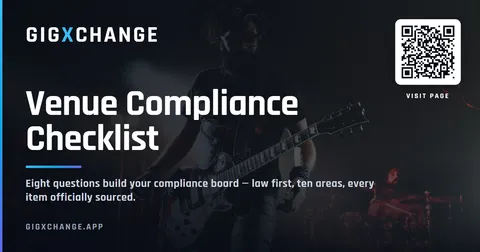
| For venuesCompliance ChecklistEight questions build your venue’s compliance board — law first, ten areas, every item linked to its official source. | |
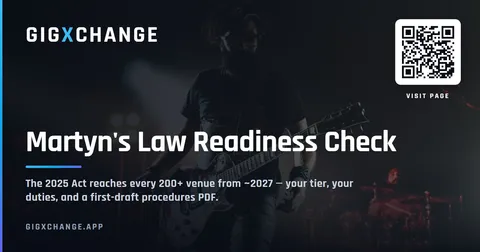
| For venuesMartyn's Law ReadinessThe 2025 Act reaches every 200+ venue from ~2027 — six questions give your tier, your duties and a first-draft procedures PDF. | |
| For venuesEvents PosterYour upcoming programme as a live what’s-on page in seven looks — status badges, ticket links and an embed for your own website. | |
| For venuesFind an ArtistPick the empty date, set a 60-second brief, and invite up to 5 ranked best-fit acts with real booking invites. |
Before you run the checker, these answers cover whether live music needs a licence at all, how the two licences differ, what a music licence costs, how one-off events are treated, and whether it works for Scotland and Northern Ireland.
| Post a gig | |
| GX Gig Rescue | |
| Booking contracts | |
| All free tools |
| gov.uk music licensing | |
| TheMusicLicence (PPL PRS) | |
| Temporary Event Notice |
| Create a free venue profile | |
| How it works |
Ten questions now beats a fine later: sign up free and run the checker, and the verdict, the cost bracket and the official links are waiting in your venue dashboard whenever you need to act on them.

Music licensing, without the law degree
Ten plain-English questions about your venue and GigXchange tells you which music licences you actually need — permission to stage it, copyright to play it, and roughly what it costs. Every answer linked to the official source.



Last updated: 14 November 2026
Do you need a music licence for your venue?
GIGXCHANGE Licence Checker is a free tool that tells a UK venue which music licences it needs, in ten plain-English questions. Most venues have two separate questions to answer. Permission: do you need a premises licence, a Temporary Event Notice or nothing at all to put the music on? In England and Wales, live music between 8am and 11pm for an audience of 500 or fewer at a venue licensed to sell alcohol usually needs no entertainment permission under the Live Music Act. Copyright: playing other people's songs, live or recorded, almost always needs TheMusicLicence from PPL PRS. The checker answers both for your venue, gives an indicative PRS cost and links each answer to gov.uk, legislation.gov.uk or PPL PRS.
It covers England and Wales, Scotland and Northern Ireland, and you can try it here without signing up. The worked example below runs three example venues through it, so you can see the verdict before you answer a question.
Walk the checker
The real Licence Checker in the GigXchange app, step by step: from ten plain questions about your venue and your nights to a verdict on which licences you need, with the official sources linked.
Music licensing confuses venues because it is two separate questions answered by two separate bodies. Permission to stage live music is entertainment licensing, run by your council and largely switched off for small licensed venues by the Live Music Act 2012. Copyright to play the music is TheMusicLicence from PPL PRS, which applies UK-wide whatever the permission answer.
The Licence Checker answers both in one pass, and you can try it right here on the website with no account - tap Try it now. Below is the real thing in the app, screen by screen, for a pub in England and Wales putting on amplified live music for up to 100 people as a one-off that runs past 11pm - exactly the case where the answer is a Temporary Event Notice plus TheMusicLicence.
- 01 / 03
Ten questions
Where you are, what music you have, how many people, what hours and whether you sell alcohol - one plain-English question at a time.
- One at a timeEach question is a tap, so the whole set takes a couple of minutes.
- Nation firstEngland and Wales, Scotland and Northern Ireland each get their own rules.
- Saved to your venueYour answers stay on your venue account, ready for next time.
The first question is where you are, because the rules split by nation: the Live Music Act exemption is England-and-Wales law, Scotland's entertainment licences come from local councils and Northern Ireland's from district councils.
- 02 / 03
Your venue, then your verdict
Your answers read back as one sentence you can tap to change, and the verdict lands straight under it.
- Tap to editEach part of the sentence is a live answer - change one and the verdict updates.
- Two verdictsPermission to stage it and copyright to play it, answered separately.
- Plain wordsWhat you need, said the way you would say it.
This pub's one-off for up to 100 people runs past 11pm, outside the Live Music Act hours, so none of the exemptions fits its answers: the verdict is a Temporary Event Notice for permission, plus TheMusicLicence for the music itself.
- 03 / 03
Every source, one list
The official pages behind your verdict in one place - the music licensing overview, Temporary Event Notices, premises licences, the Live Music Act 2012, TheMusicLicence and the PPL PRS calculator.
- Deep linksStraight to the page that answers the question, not a homepage.
- Scotland and Northern IrelandTheir own council and licensing routes, listed separately.
- Noise tooHow councils handle noise, for the night itself.
Ten links sit behind this verdict, each opening the page that answers the question - the law itself on legislation.gov.uk, the process on gov.uk and the price on PPL PRS.
How it works
The Licence Checker takes you from “do we even need a licence?” to an action plan in a few minutes: answer the questions, read the verdict, and follow the official links to apply or check the detail.
Describe your venue
Nation, music type, amplification, alcohol licence, capacity, hours, frequency. The questions branch — you only see what applies.
The staging verdict
The Live Music Act 2012 conditions applied to your answers: whether your music needs entertainment permission, a TEN, or nothing extra at all.
The music verdict
Whether you need TheMusicLicence (PPL PRS) — and an indicative PRS cost for a venue like yours (per session for a one-off, a year for regular music), with the official calculator linked.
Follow the plan
A short action plan with only official links — gov.uk, legislation.gov.uk, PPL PRS, your licensing authority. Verify everything yourself.
Worked example
Three example venues, run through the checker itself: a late pub gig, an acoustic café night and a venue in Scotland. Pick one to see its answers in one sentence and the verdict it gets, with the cost and the steps.
A venue in England & Wales, that sells alcohol, putting on amplified live music for 101–300 people, outside 8am–11pm, as a one-off — not covered by its premises licence, open to the public, playing ordinary copyrighted music.
Use a Temporary Event Notice. You need TheMusicLicence.
The PRS live-music element only, at the free-entry pub and bar session rate (PRS Tariff P, from 1 October 2026, standard rate, + VAT; +50% in an unlicensed first year), priced on this as the room’s capacity. Tariff P has a £128.34 minimum a year, so a single night is never the whole cost. Ticketed pub nights pay 3% of gross receipts once takings average £489 or more a session; other venues use other PRS tariffs. Recorded or background music is billed on top - get your exact figure from the PPL PRS calculator.
Get an exact quote from PPL PRS →1
- Permission
- Action needed
- Copyright
- Action needed
- Action plan
- 4 steps
23
Use a Temporary Event Notice
Because it runs outside 08:00–23:00, this counts as regulated entertainment. For a one-off, the simplest route is a Temporary Event Notice (TEN): fewer than 500 people at all times, including staff, give your council at least 10 clear working days’ notice, £21.
Apply for a Temporary Event Notice →4
You need TheMusicLicence
Playing recorded music in public or staging live music as a business needs TheMusicLicence — one licence covering both PRS (songwriters) and PPL (recordings & performers). It applies UK-wide. Get it before music plays: an unlicensed first year is charged at +50%.
Get TheMusicLicence →- 01Apply for a Temporary Event Notice (£21, at least 10 clear working days ahead)
- 02Get TheMusicLicence (est. £18.34–£44.24 per session, within a £128.34 minimum a year)
- 03Manage noise — keep your Environmental Health team and neighbours onside (statutory nuisance still applies)
- 04Display your licence where required and keep to its conditions
This is the checker's own answer for an example venue. Yours takes ten questions and about two minutes.
Everything in the checker
Everything in the checker is built so a programmer can answer the licensing question in minutes, not a weekend of forum threads: a clear verdict, a cost bracket and the official sources behind each answer.
Ten questions, plain English
Nation, music type, amplification, alcohol licence, capacity, hours, frequency — the questions branch so you only answer what applies to your venue.
The Live Music Act, decoded
The 2012 deregulation has real conditions — capacity, hours, on-licence. The checker applies them to your answers and tells you if you need entertainment permission at all.
TheMusicLicence, explained
Permission to stage music and the right to play it are different licences. The checker covers the PPL PRS side too — one combined licence for songwriters and recordings.
An indicative PRS cost
Not just "you need a licence" — an indicative PRS figure for a venue like yours: per session for a one-off, a year for regular music, with a link to the official PPL PRS calculator for the exact quote (and for the largest events, where the checker gives no figure).
England & Wales, Scotland, NI
Licensing law differs by nation. Pick where you are and the verdict, action plan and links route to the right regime and the right authority.
What to actually do next
Each verdict comes with the steps: check your premises licence, file a Temporary Event Notice, get TheMusicLicence before the music plays.
Official links only
Every claim links to the source — gov.uk, legislation.gov.uk, PPL PRS, mygov.scot, nidirect. Verify everything; take nothing on faith.
Your data, your call
Try it right here and nothing leaves your browser unless you ask us to email your verdict. Signed in, your check saves to your venue dashboard — restored on any device, re-runnable any time.
The two licences venues mix up
Venues mix up two licences: permission to hold live music at all, and the licence to play copyright music. They are different questions with different answers, different issuers and different fines if you get them wrong.
Permission: often freer than you think
The Live Music Act 2012 deregulated a huge slice of small-venue live music in England and Wales: between 8am and 11pm, for an audience of 500 or fewer, at premises licensed to sell alcohol, live music generally isn't licensable as regulated entertainment. Venues still pay agencies to "sort licensing" for nights that need no permission at all. The checker applies the real conditions to your real answers — because the moment you're outside them (later hours, bigger room, no on-licence), the answer flips and you need to know.
Copyright: almost never optional
Playing music as a business — live or recorded — uses other people's work, and TheMusicLicence from PPL PRS is how songwriters and recording owners get paid. It applies UK-wide and it applies to you whether or not the permission side was deregulated. The one honest carve-out: acts playing only their own original material (not PRS members) or genuinely royalty-free music — the checker asks exactly that question.
The cost of getting it backwards
Skipping TheMusicLicence isn't a saving; starting without a licence can cost more, with some PRS tariffs adding 50% for the first year. Meanwhile over-licensing — paying for entertainment permission the Live Music Act says you don't need — is money burned quietly every year. Both mistakes come from the same place: not knowing which question is which. Ten questions fixes that.
What it costs: the official 2026-27 figures
For a pub or bar, PPL PRS's cost example (November 2026) is £332.53 + VAT a year for playing the radio in 120 sqm or less - that is recorded music. Free-entry live music adds £14.64 + VAT a session for a room of up to 100 (PRS Tariff P, from 1 October 2026), within a £128.34 minimum a year, and +50% in an unlicensed first year. The full table, room size by room size, is in our UK live music licence guide.
Scotland and Northern Ireland play by their own rules
The 2012 deregulation is England-and-Wales law. Scotland's public entertainment licences come from local councils (Licensing Boards handle alcohol); Northern Ireland's entertainment licences run through district councils. The checker asks where you are first and routes the whole verdict — and every link — to the right regime.
Licensing is one row of the compliance picture
Music licensing sits alongside fire safety, capacity, insurance and the rest of the venue-compliance stack — the companion Compliance Checklist covers that wider picture, tailored to your venue type. And once the paperwork's sorted, fill the stage: post a gig, keep Gig Rescue for dropouts, and price the nights with the rate calculator. More on the venue side: GigXchange for venues.
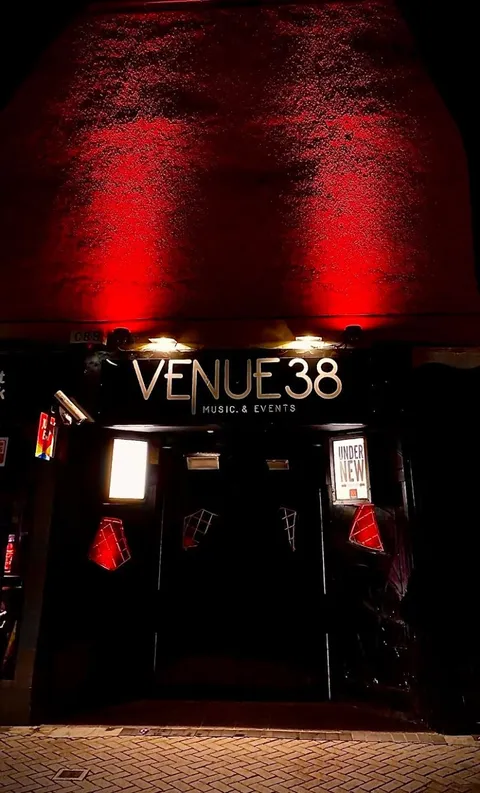
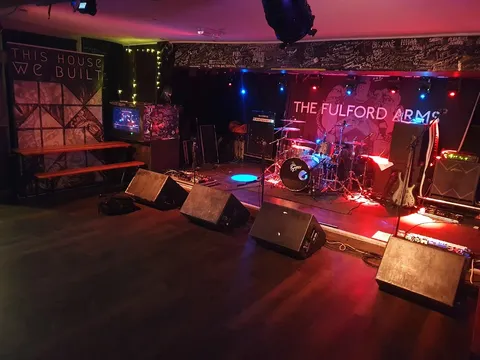
Venues already on GigXchange
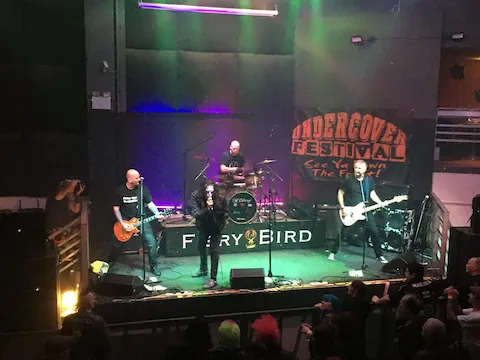
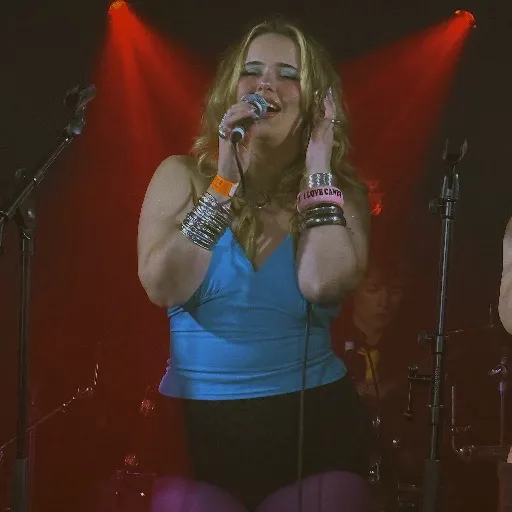
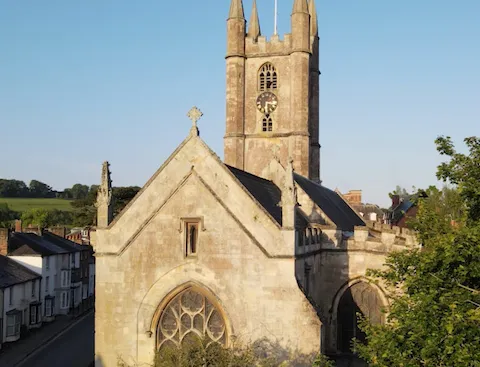
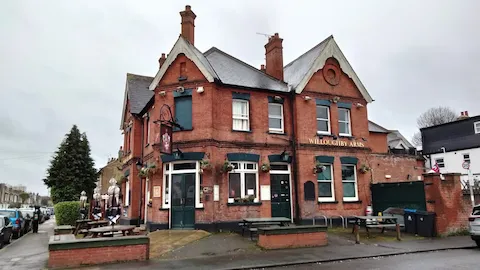
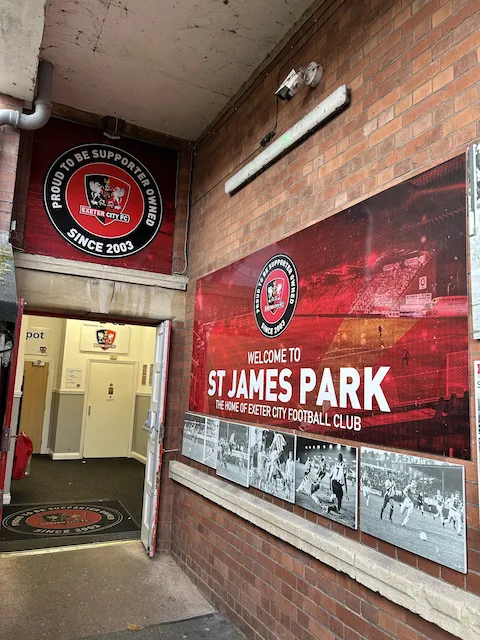
Every venue here can run the Licence Checker free, with the same ten questions and the same official sources, and the result is saved to its own profile so it is there the next time the question comes up.





Browse the UK venue directory · GigXchange for venues · Create a free venue profile


More free tools for venues
6 more tools for running a venue, all free with a venue profile, including the Post a Gig, GX Gig Rescue and Compliance Checklist. None of them needs a card, a trial or a paid plan, and each one is built around how UK venues book, promote and run live music.
Post a Gig
List an open slot in two minutes and take applications from gig-ready artists — full profiles and verified reviews attached.
GX Gig Rescue
Act dropped out? Broadcast an urgent booking invite to up to 25 available acts — first to accept is booked.
Compliance Checklist
Eight questions build your venue’s compliance board — law first, ten areas, every item linked to its official source.
Martyn's Law Readiness
The 2025 Act reaches every 200+ venue from ~2027 — six questions give your tier, your duties and a first-draft procedures PDF.
Events Poster
Your upcoming programme as a live what’s-on page in seven looks — status badges, ticket links and an embed for your own website.
Find an Artist
Pick the empty date, set a 60-second brief, and invite up to 5 ranked best-fit acts with real booking invites.
Frequently asked questions
Before you run the checker, these answers cover whether live music needs a licence at all, how the two licences differ, what a music licence costs, how one-off events are treated, and whether it works for Scotland and Northern Ireland.
Ten questions now beats a fine later
Ten questions now beats a fine later: sign up free and run the checker, and the verdict, the cost bracket and the official links are waiting in your venue dashboard whenever you need to act on them.