UK-EU Summit 2026: One Paragraph for Touring Artists, and a Youth Scheme Due by 2030Leaders met in Brussels on 20 November. Here's what the joint statement says about touring, what the Youth Experience Scheme could mean for young musicians, and what a UK gig pays while the EU route stays costly.
The short version
The second UK-EU summit, held in Brussels on 20 November 2026, gave touring artists one paragraph in its joint statement: both sides "should explore further mutually beneficial solutions", with no deal on visas, carnets or haulage. Its biggest change for young musicians is a Youth Experience Scheme letting 100,000 people aged 18 to 31 a year live and work in the EU for up to 3 years, with first travel expected by January 2030.
Below: what the summit agreed on touring, what UK Music and the ISM said, how the youth scheme works, what the touring barriers cost, what a UK gig pays on our GX Index (a solo act's UK pub median was £260 on 21 November 2026), and a Home Office plan for later pub hours on big nights.
If you were hoping Brussels would make your next run of EU dates easier to book, this year's UK-EU summit, held in Brussels on Friday 20 November, did not get you there. The joint statement agreed by Prime Minister Andy Burnham and EU leaders covers food trade, carbon markets, defence, migration and student fees. Touring artists get one paragraph.
I've been gigging since 2009, so I read the documents for one thing: what changes for people who play, book and run rooms. The short answer is nothing yet for a band on the road, something real for players aged 18 to 31, and a reason to watch the diary for later licensing hours. Below, I've set it all beside what a UK date pays on our own GX Index.
12 to 20 November 2026 · the source sits under each figure
The summit week, by the numbers
Scheme figures are from the UK government's Youth Experience Scheme explainer and the joint statement of 20 November 2026. The letter is from UK Music's announcement of 12 November 2026. The consultation is the Home Office's, opened 19 November 2026.
Sources: UK government explainer · UK-EU joint statement · UK Music, 12 November 2026 · Home Office consultation
- 100,000Places a year from each side on the new Youth Experience SchemeUK government explainer
- 3 yearsLongest stay on the scheme: a 2-year visa plus an optional third yearUK government explainer
- 18-31Age band for the scheme, judged on the day the visa startsUK government explainer
- 2030First travel on the scheme is expected by January 2030UK-EU joint statement
- 300+Organisations that signed the Cultural Exchange Coalition's touring letter before the summitUK Music, 12 November 2026
- 17 DecThe Home Office consultation on later licensing hours closes at 12.15am on 17 DecemberHome Office consultation
Scheme figures are from the UK government's Youth Experience Scheme explainer and the joint statement of 20 November 2026. The letter is from UK Music's announcement of 12 November 2026. The consultation is the Home Office's, opened 19 November 2026.
1. UK-EU summit 2026: what it agreed for touring artists
This year's summit agreed no new rules for touring artists. Paragraph 43 of the joint statement says both sides value cultural exchange, including touring artists, and should look for solutions together, and that the yearly High Level Meeting on Culture, first held this year, carries on. There is no deal, timetable or named fix.
The bigger agreements that day were a food and drink deal (known as SPS), a link between the UK and EU carbon markets, talks on student tuition fees due to finish within 6 months, and the Youth Experience Scheme. The government's summary of the package files touring artists under trade in services. There, both sides agreed to keep talking about business mobility (travelling for work) and to look for ways to support touring artists.
What the joint statement leaves out
The Cultural Exchange Coalition, whose letter was signed by more than 300 UK and EU music, live performance and cultural organisations, wrote to the leaders on 12 November. It asked for a structured UK-EU dialogue on touring, practical fixes for moving people and equipment, and a way back into European culture programmes such as Creative Europe. Its founding members include UK Music, the Musicians' Union, the ISM, PRS for Music and LIVE, the live music industry body.
Read against that list, the joint statement does not mention carnets (the customs passports for your gear), a visa or work permit waiver, the haulage rules for tour trucks, or Creative Europe. It does not open a formal touring dialogue either. The culture forum it names is the yearly meeting that already exists.

What UK Music and the ISM said
Tom Kiehl, chief executive of UK Music, responded on the day. He said the agreement matters because both sides now accept that solutions could work for everyone and are committed to talks, and he called for formal talks on specific fixes to begin "as swiftly as possible", with a road map. He also asked the government to help UK artists and music businesses with the extra costs they face now, citing government figures of 2,490 jobs and £208m lost from UK cultural touring in the first years after Brexit, and about £1bn lost on the EU side.
The Independent Society of Musicians was blunter. It welcomed closer UK-EU ties and said it hopes young musicians will benefit from the youth scheme, but called the lack of movement on touring "deeply disappointing". It says it will keep lobbying the government to honour its manifesto pledge on touring.
2. The Youth Experience Scheme: what it means for musicians aged 18 to 31
The Youth Experience Scheme lets UK citizens aged 18 to 31 live in an EU country for up to 3 years and work, study or travel there, with 100,000 places a year each way. It is the summit's biggest change for young musicians, but it is a residence scheme, not a touring visa.
Here is how it works, from the government's Youth Experience Scheme explainer. The joint statement aims to apply the agreement by 2028 and to open the scheme to young people by January 2030. Each country's terms on work will be published before the agreement is signed.
| Question | What the explainer says |
|---|---|
| Who can apply | UK and EU citizens aged 18 to 31 on the day their visa starts |
| How many places | 100,000 a year from each side, shared between EU countries by population |
| How long | Up to 3 years: a 2-year visa, then an optional third year |
| Moving country | Up to 2 switches, so 3 EU countries in 3 years, after 12 months in each |
| Work | Allowed; each country can limit it, and the vast majority say they will not limit UK participants |
| Costs | An application fee; UK applicants need full health cover and enough money to live on |
| Not included | Benefits, or bringing dependants |
| When | First travel expected by January 2030; the aim is to apply the agreement by 2028 |
Youth Experience Scheme: the terms agreed on 20 November 2026
Can you gig around Europe on it?
Partly. The scheme lets you base yourself in one EU country and work there, so a 24-year-old guitarist could move to an EU city and play its bars, weddings and function nights like a local, as long as that country does not restrict work.
What the explainer does not describe is a run of dates across several countries on the same visa. It talks about living in one member state at a time, and it describes the 90-days-in-180 Schengen limit as the rule for UK visitors today. Until the full terms are out, treat every other country's work rules as unchanged.
For a short run now, the ISM's visa guide for Europe sets out what each country asks for.
Who it leaves out: over-31s, crews and bands on the road
The age limit does a lot of work here. A band whose drummer is 33 cannot all move out together on it, and nor can many of the sound engineers, tour managers and backline techs who make a tour run.
And a two-week van tour through Belgium, the Netherlands and Germany still runs on the old rules, whatever everyone's age: short-stay limits, each country's own work rules and the paperwork for your gear. That is the gap the trade bodies wanted the summit to close, and it stays open.
EU players coming here
The scheme works both ways. If it opens on time, EU citizens aged 18 to 31 will be able to live and work in the UK for up to 3 years, paying the Immigration Health Surcharge at 75% of the usual rate.
For venues and promoters, that could mean young EU musicians living in UK towns who take local bookings, subject to the UK's final terms on work. For UK players it means a more international local scene, and more people going for the same Friday nights, so a current profile and a clear rate count for more.
3. What the touring barriers cost: the DCMS numbers
UK Music's case for a touring fix leans on the government's own study, which found UK-based artists played 21% fewer EU shows in 2024 than in 2019. It puts the UK's loss at £208m in economic value and 2,490 full-time equivalent jobs from 2022 to 2024, counting the knock-on spending around them.
The study, The economic benefits of touring and impact of EU exit, was published by DCMS, the government's culture department, on 27 August 2026. It also estimates the loss across the EU countries it studied at about £1.04bn and 17,010 full-time equivalent jobs.
Small rooms took the hit
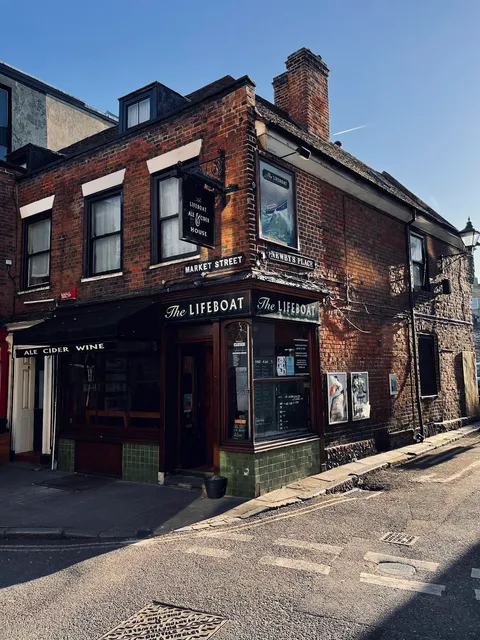
The split matters for grassroots players. Shows in smaller venues were still 22% below 2019 in 2024, slightly worse than the overall fall, while stadium and arena shows by UK acts were 56% above it. The study also found smaller venues took a slightly bigger share of the money lost than large ones.
I set out the five barriers, priced, in our Brexit touring report post in September, and none of them changed at the summit. For the wider industry picture, our This Is Music 2026 post covers UK Music's report, published on 17 November.
4. What a UK gig pays while the EU route stays costly
While touring Europe stays costly, the benchmark for any EU date is what the same night pays at home. On our GX Index, read on 21 November 2026, a solo act's UK median for a pub or bar gig is £260 and a 3-4 piece's is £350. An EU club date has to beat those after travel and paperwork.
These are UK medians from the GX Index, our database of real UK gig fees, for a selection of gig types, each with at least 20 observations. The middle half is the range the middle 50% of fees fall in.
Pub or bar, solo
| UK median | £260 |
| Middle half | £162–£330 |
| Observations | 729 |
Pub or bar, duo
| UK median | £325 |
| Middle half | £250–£500 |
| Observations | 122 |
Pub or bar, 3-4 piece
| UK median | £350 |
| Middle half | £275–£600 |
| Observations | 488 |
Pub or bar, 5+ piece
| UK median | £525 |
| Middle half | £375–£1,003 |
| Observations | 395 |
Corporate, solo
| UK median | £388 |
| Middle half | £281–£474 |
| Observations | 199 |
Private party, 3-4 piece
| UK median | £915 |
| Middle half | £583–£1,463 |
| Observations | 544 |
Wedding, 3-4 piece
| UK median | £1,163 |
| Middle half | £812–£1,582 |
| Observations | 1,665 |
GX Index UK medians by gig type and act size, read 21 November 2026 (20+ observations each)
| Gig and act size | UK median | Middle half | Observations |
|---|---|---|---|
| Pub or bar, solo | £260 | £162–£330 | 729 |
| Pub or bar, duo | £325 | £250–£500 | 122 |
| Pub or bar, 3-4 piece | £350 | £275–£600 | 488 |
| Pub or bar, 5+ piece | £525 | £375–£1,003 | 395 |
| Corporate, solo | £388 | £281–£474 | 199 |
| Private party, 3-4 piece | £915 | £583–£1,463 | 544 |
| Wedding, 3-4 piece | £1,163 | £812–£1,582 | 1,665 |
GX Index UK medians by gig type and act size, read 21 November 2026 (20+ observations each)
What an EU date has to beat
Take a four-piece pub band. At home, the UK median for that night is £350 for the act, before fuel. An EU club date has to clear that after ferries or flights, a carnet for your gear if you need one, and any work permit the country asks for.
The youth scheme does not change that sum for a band on the road. It does change it for a player who moves there and gigs locally.
If your fee has not moved in a while, check it against the median for your act size, or run the numbers in our gig rate calculator. Our guide to how much gigs pay in the UK goes deeper on the same data.
5. Licensing hours extension consultation: later bars on big nights, not later bands
Also this week, the Home Office opened a consultation on 19 November on letting pubs and bars in England and Wales keep serving from 11pm to 1am on a list of big nights up to summer 2029. It closes at 12.15am on 17 December 2026, so responses are due by the end of 16 December. The proposal covers alcohol sold to drink on the premises and late-night food; it does not list live music.
The power comes from section 172 of the Licensing Act 2003, which lets the Secretary of State extend hours for up to 4 days around an occasion of exceptional significance. Until now each event got its own consultation; this one covers the rest of this Parliament in one go.
Which nights are on the list
The consultation document proposes extensions for home nations' knockout matches at the men's Euro 2028 and women's Euro 2029, the 2027 Women's World Cup in Brazil, the 2027 men's Rugby World Cup in Australia, Six Nations final match days, the 2028 Olympic and Paralympic opening and closing ceremonies, the King's 80th birthday celebrations on 10 June 2028, and the Eurovision grand final in 2027, 2028 and 2029.
Time differences mean the tournaments in Brazil and Australia may need different hours, and the consultation asks about those separately. The Morning Advertiser reported the launch for the pub trade on 20 November.


What it means for a gig on those nights
If you run a room, a Eurovision final or a home nation's Euro 2028 quarter-final could mean a busy bar until 1am. But this order, as proposed, would change when you can sell drinks and late-night food, not what entertainment your licence covers.
If you want a band or a DJ playing past the hours your licence allows for music, you still need your own permission, usually by giving your council a Temporary Event Notice in good time. Our live music licence guide covers what your premises licence and music licence need to say.
If you book acts, these are dates to pencil in now. Big match nights and Eurovision parties need entertainment around the screen, and the acts that suit them get booked early.
Stay in the loop
Get updates when we publish new data, tools, or guides. No spam. Privacy.
6. Who the summit touches: artists, venues, promoters and organisers
Nothing about your next EU date changes because of the summit. Here is where the week's news does and does not touch your diary, by role.
7. What to do next
If touring matters to you, read the summit documents yourself: the culture paragraph is short. If you run a venue or book big-night events, the licensing hours consultation is open to venues and the public until 12.15am on 17 December 2026.
Whatever happens in Brussels, your next gig is still at home. Check your fee against the GX Index, find rooms in the UK venue directory, or put your act on artist profiles so venues can find you. I'll come back to this when the scheme's full terms are published and when the next culture meeting reports.
Frequently Asked Questions
Accuracy
We check the facts in this article each time it is refreshed. If anything on this page is out of date, email support@gigxchange.app and we will update it promptly.
Sources & verification
- joint statement gov.uk
- summary of the package gov.uk
- wrote to the leaders on 12 November ukmusic.org
- responded on the day ukmusic.org
- Independent Society of Musicians ism.org
- Youth Experience Scheme explainer gov.uk
- ISM's visa guide for Europe ism.org
- The economic benefits of touring and impact of EU exit gov.uk
- consultation document gov.uk
- reported the launch morningadvertiser.co.uk
- Temporary Event Notice gov.uk
- summit documents gov.uk
- licensing hours consultation gov.uk
Related reading
- This Is Music 2026: £8.4bn Record, Creator Pay Up 0.2%
- Brexit Touring Report: £208m Lost, EU Shows Down 21%
- 6 Music Festival 2027: Newcastle's Grassroots Venues
- Hometown Meltdown 2026-27: The Six Grassroots Venues
- PRS Licences and Grassroots Venues: The 21% Pilot
Annual refresh commitment
This guide was published on 21 November 2026 and is refreshed every November. The Youth Experience Scheme's work rules, the next UK-EU culture meeting, the licensing hours decision and our GX Index fees all move between updates, so annual verification matters. We re-verify every reference, recommendation, and data point once a year. Next scheduled refresh: November 2027. If any claim is outdated before then, email support@gigxchange.app and we aim to update it within one working day.