Artist guide
How to Contact Venues for Gigs
Who books, what to send, when to chase.
How to contact venues for gigs in the UK: who books the music, what to send and when to follow up. Pub median £265 (546 fees) for a solo act.
Updated 31 October 2026
01 — Contact Venues for Gigs
How do you contact a venue for a gig?
Find the person who books the music, then send one short email: who you are, a link to your music, two or three dates and your fee. UK pubs pay a median £265 (546 fees) for a solo act in the GX Index.
Most venues book by email or through a booking platform, not by phone. Keep the first message under 150 words, follow up once after a week, and show them live footage - the GigXchange venue directory lists 3,227 UK venues to start from.
On this page| 02Contact a venue in six stepsThe steps | |
| 03How to email a venue for a gigHow to email a venue | |
| 04What UK pubs pay for a gigWhat venues pay | |
| 05Work out your gig feeYour fee | |
| 06Venues that book acts like youVenues that book acts | |
| 07Venues already booking on GigXchangeVenues on GigXchange | |
| 08When to contact venues and how to follow upTiming and follow-up | |
| 09Get booked by venues on GigXchangeOn GigXchange | |
| 10See it in actionThe app, screen by screen | |
| 11Questions7 answers | |
| 12Keep exploringThe other guides and tools |
02 — The steps
6 stepsContact a venue in six steps
Contacting a venue for a gig takes six steps: get your music online, find venues that book your kind of act, find the booker, send a short pitch, follow up once and confirm in writing.
| Step 01Get your music and video onlineOne link a booker can open on a phone: a live clip, two or three tracks, a photo and your set length. An EPK puts it on one page. | |
| Step 02Find venues that book your kind of actLook at who already plays there - a pub that books covers duos is a better first pitch than a jazz club. Search the venue directory by town. | |
| Step 03Find the person who books the musicCheck the venue's website, its social pages and its gig listings for a booking email or a named promoter. Ask the bar staff if there is none. | |
| Step 04Send a short pitchUnder 150 words: who you are, where you have played, a link, two or three dates and your fee. Name the venue so it is not a mass mailing. | |
| Step 05Follow up once, after a weekOne polite nudge with a new date or a fresh clip. No reply after that means not now - try again next season, never a third chase. | |
| Step 06Confirm the gig in writingDate, set times, fee, how and when you are paid, and what the venue provides. A short email or a contract stops arguments on the night. |





03 — How to email a venue
How to email a venue for a gig
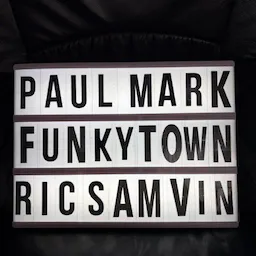
To email a venue for a gig, send one short message to the booker: who you are, a link to your music and a live video, two or three dates and your fee. Everything should open on a phone in one tap.
| A pitch email under 150 wordsWho you are, what you play, where you have played, your dates and your fee - the venue outreach templates have ready-made versions to adapt. | |
| An EPK - your music on one pagePhoto, bio, tracks, live video, set lengths and contact in one link, instead of five attachments a booker will not open. | |
| A setlist for the roomPubs want to know you can fill two 45-minute sets with songs the room knows. Show them the list, timed. | |
| A link page for your socialsOne link for your bio and your email signature that carries the rest - music, video, dates and how to book you. |
04 — What venues pay
What UK pubs pay for a gig
UK pubs pay a median £265 (546 fees) for a solo act, £325 (93 fees) for a duo and £350 (379 fees) for a three or four piece in the GX Index - quote inside that range and say what it covers.
These are medians of real advertised and agreed fees, not a rate card. The Musicians' Union publishes national minimum gig rates per player; the rate calculator turns your act, town and night into a fair figure to quote.
- Solo act £265 median · 546 observationsThe MU publishes no solo figure
- Duo £325 median · 93 observations
- 3 to 4 piece band £350 median · 379 observations
- 5+ piece band £525 median · 307 observations
| Gig rate calculator | |
| Every GX Index fee table | |
| Musicians' Union national gig rates |
05 — Your fee
Work out your gig fee
Work out a fair fee for your own act before you quote it: pick your line-up, your town and the kind of gig, and the calculator reads the live GX Index - a solo act's pub median is £265 (546 fees).
06 — Venues that book acts
71 venuesVenues that book acts like you
The venues most likely to book you are the ones already booking acts like yours near you. The GigXchange venue directory lists 3,227 UK venues, and the venues below book artists directly on GigXchange.
Start with the city guide for your town: it names the rooms that book live music, what they pay and who to ask.
Scroll to zoom (hold Ctrl / two fingers)· tap a layer to switch · click a pin for details, a cluster for its area.
07 — Venues on GigXchange
Venues already booking on GigXchange
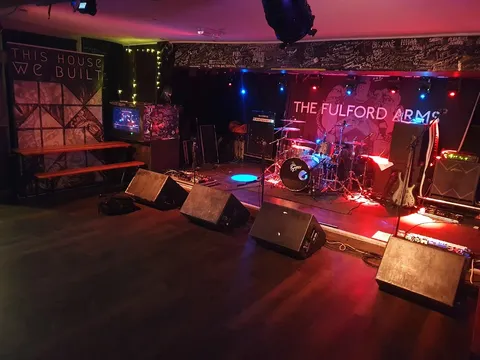
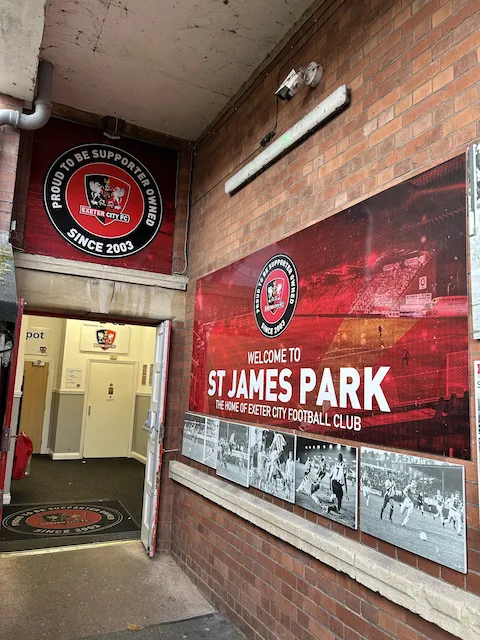
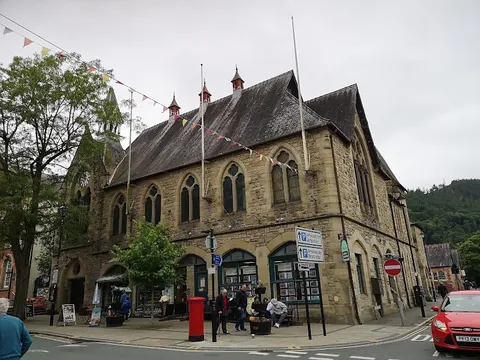
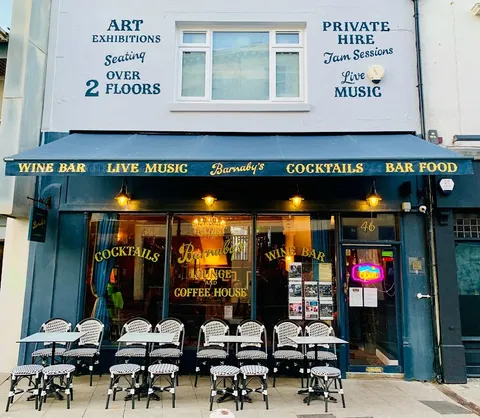
These venues book artists directly on GigXchange - 71 venues are members, each with a public profile showing what they book and where they are. Open one to check your act fits before you pitch them.
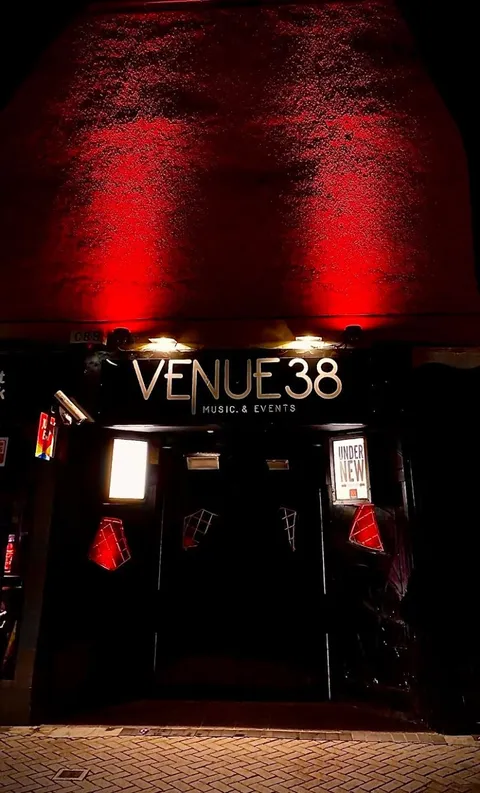
- Venue38
- The Tranquil Turtle
- The Fulford Arms
- The King Arthur
- St James Park
- Firebug
- Nicholas Chamberlaine School
- The Point Events Venue
- Llangollen Town Hall
- Kettering Rugby Football Club
- The Victoria Birmingham
- Trillians Rock Bar
- The White Lion
- Barnaby's Lounge
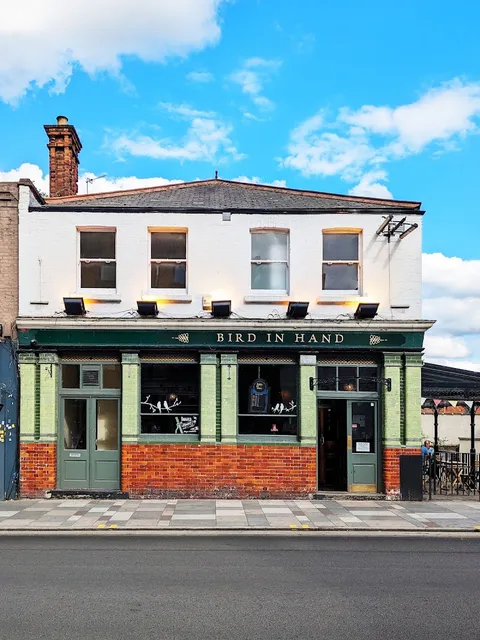
- Bird in Hand Pub
- Goffs park social club
- Behind The Wall
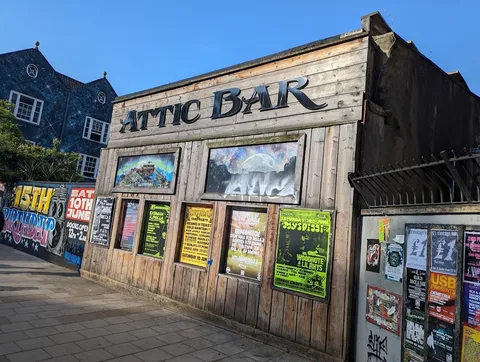
- The Full Moon and Attic Bar
- Capones
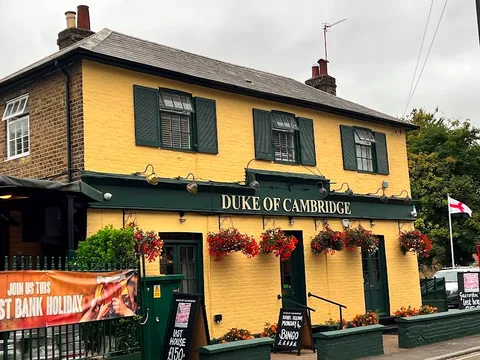
- The Duke of Cambridge
| Venue38Ayr | |
| The Tranquil TurtleStevenage | |
| The Fulford ArmsYork | |
| The King ArthurGlastonbury | |
| St James ParkExeter | |
| FirebugLeicester | |
| Every UK venueThe venue directory, town by town |
08 — Timing and follow-up
When to contact venues and how to follow up
Contact venues six to eight weeks before the dates you want, on a weekday morning, and follow up once after a week. Venues plan Christmas and summer earlier - pitch those by September and March.
| Pitch six to eight weeks aheadMost pubs and bars fill their calendar a month or two out. Earlier is fine; a week's notice only works for a cancellation slot. | |
| Offer dates, not 'any time'Two or three specific nights are easier to say yes to than an open offer. Weeknights are easier to win than Saturdays when you are new. | |
| Chase once, then move onOne follow-up after a week with something new - a clip, a review, a date. A booker who says no now may say yes next season. | |
| Turn one gig into the nextAsk the booker for a rebooking date on the night, collect a review, and register the set with PRS for Music so you are paid royalties too. |
09 — On GigXchange
Get booked by venues on GigXchange
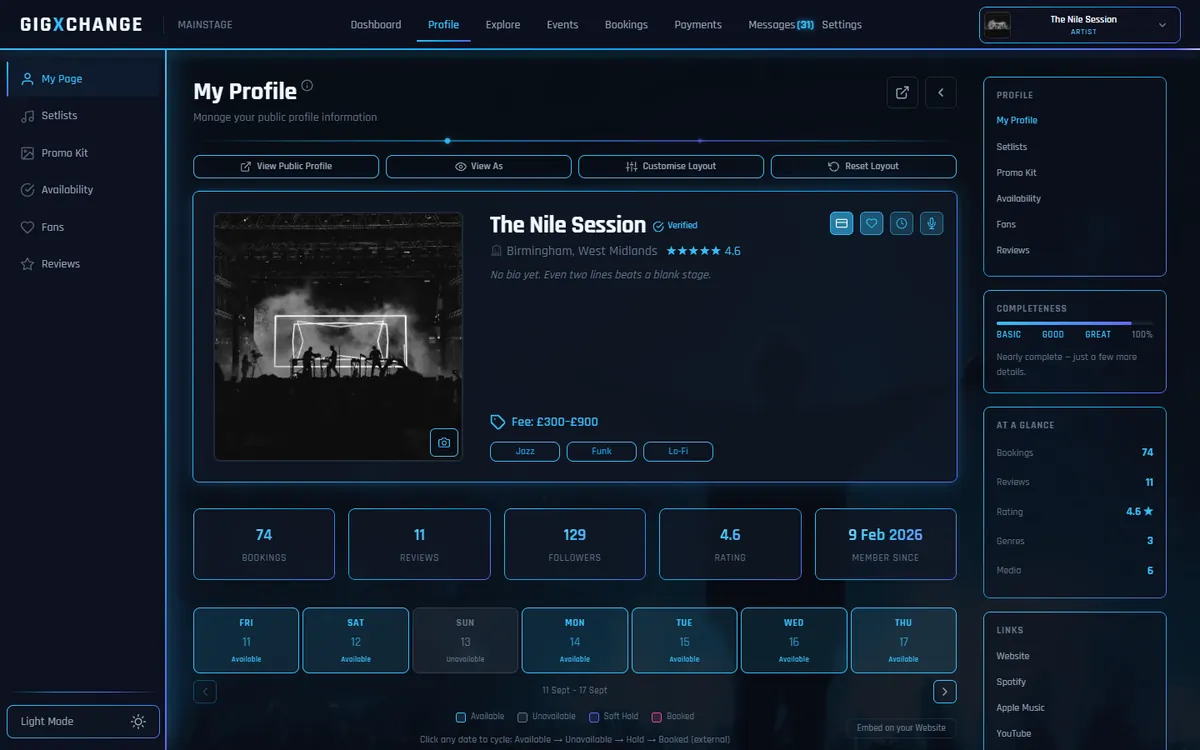
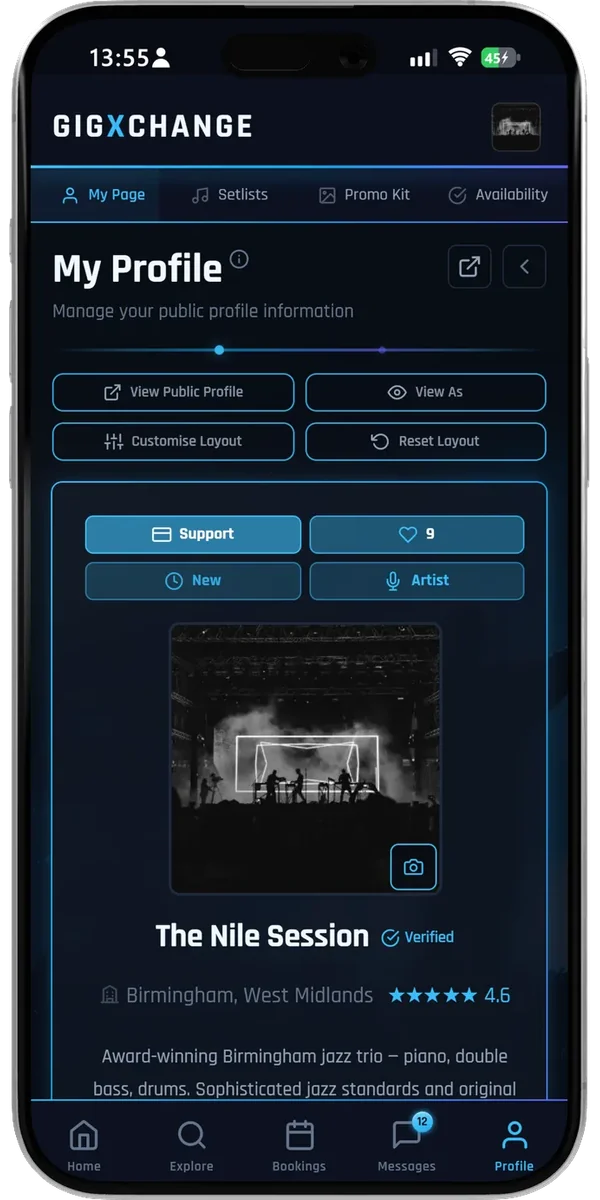
On GigXchange venues come to you: build a free profile, apply to open gig slots and agree the fee in chat. 1,021 artists are on GigXchange, and payment is held securely until the gig is played.
- 01
Create a free artist profile
Your photos, music, video, fees and dates on one page venues can find and book from.
- 02
Apply to open gig slots
Venues post the dates they need filled; apply in two taps with your profile attached.
- 03
Agree the fee and the details in chat
The offer, the counter-offer and the confirmed booking stay in one thread, with a digital contract.
| Create a free artist profile | |
| Apply to open gig slots | |
| Agree the fee and the details in chat |
See it in action
Your profile, the gigs venues post, the booking chat, the EPK and the setlists - the free artist side of GigXchange, screen by screen.
- 01 / 06
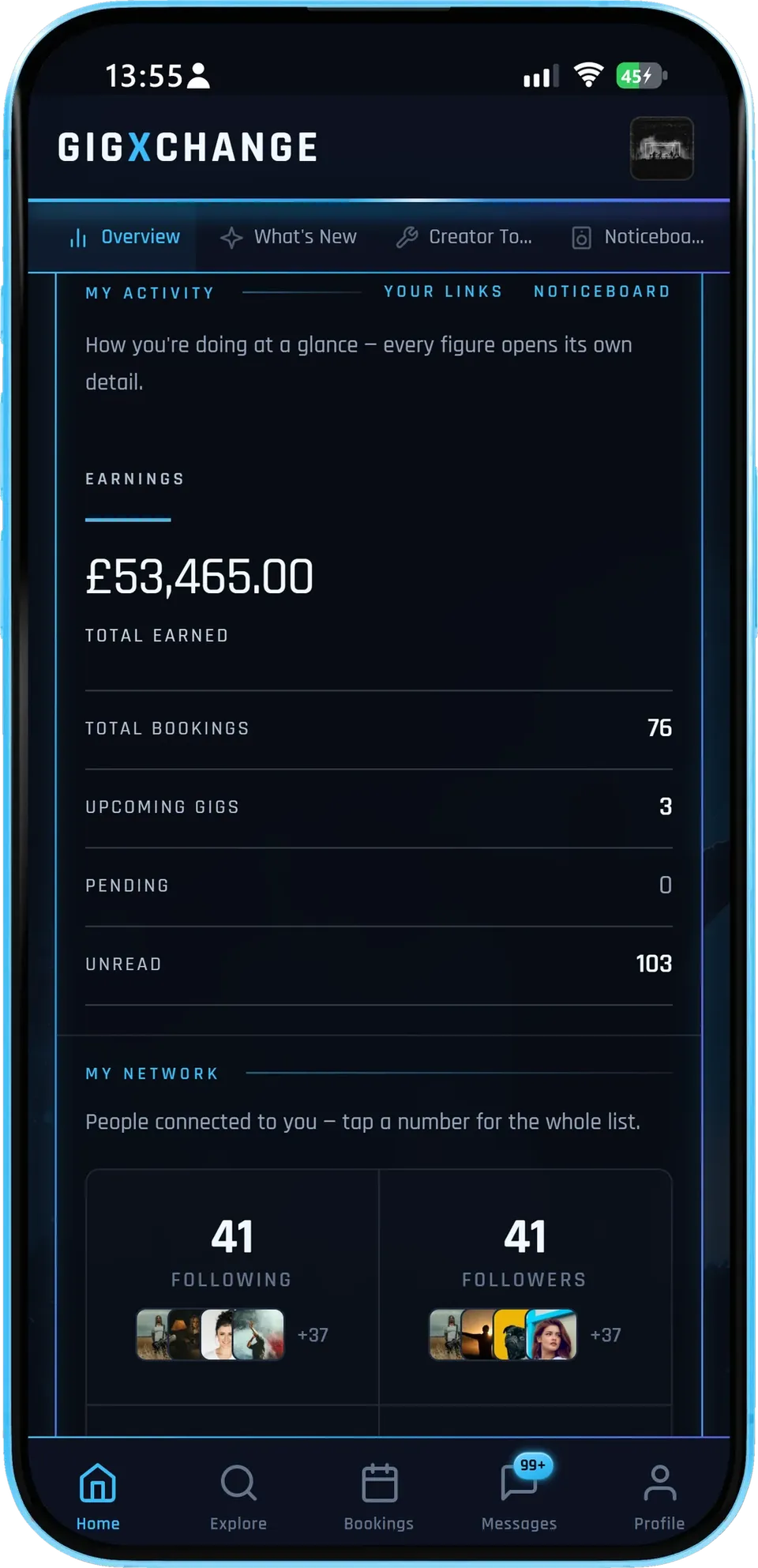
Your dashboard
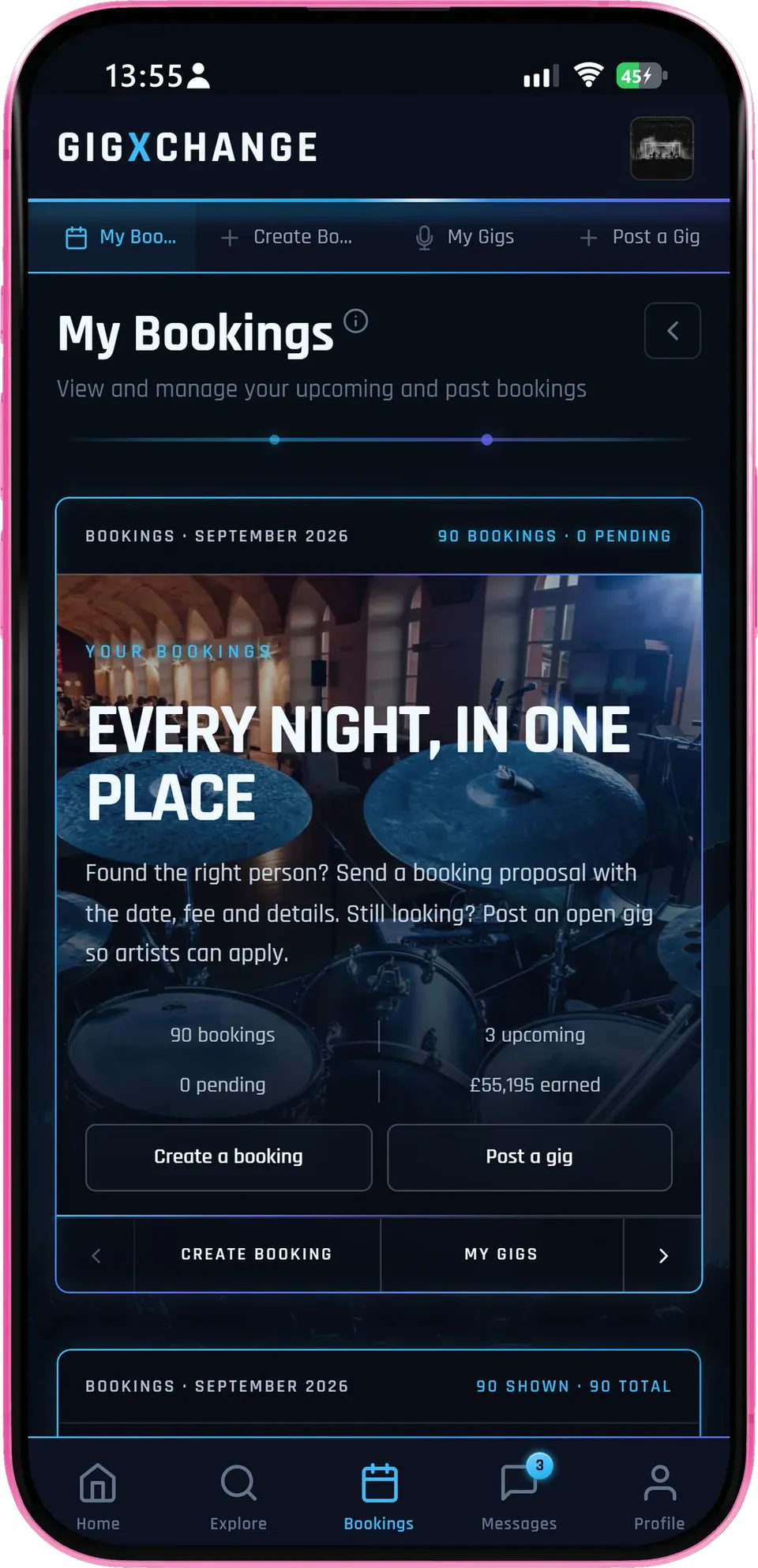
The moment you log in, everything that matters is in front of you — what's booked, what you've earned, and what needs you next. No digging through tabs.
- Bookings at a glanceConfirmed, pending and upcoming gigs in one view — so nothing slips through the cracks.
- Earnings, trackedSee deposits held securely and payouts released, with a running total you can trust.
- Live activity feedNew messages, offers and event updates surface the second they happen — you're never the last to know.
- 02 / 06
Explore the scene
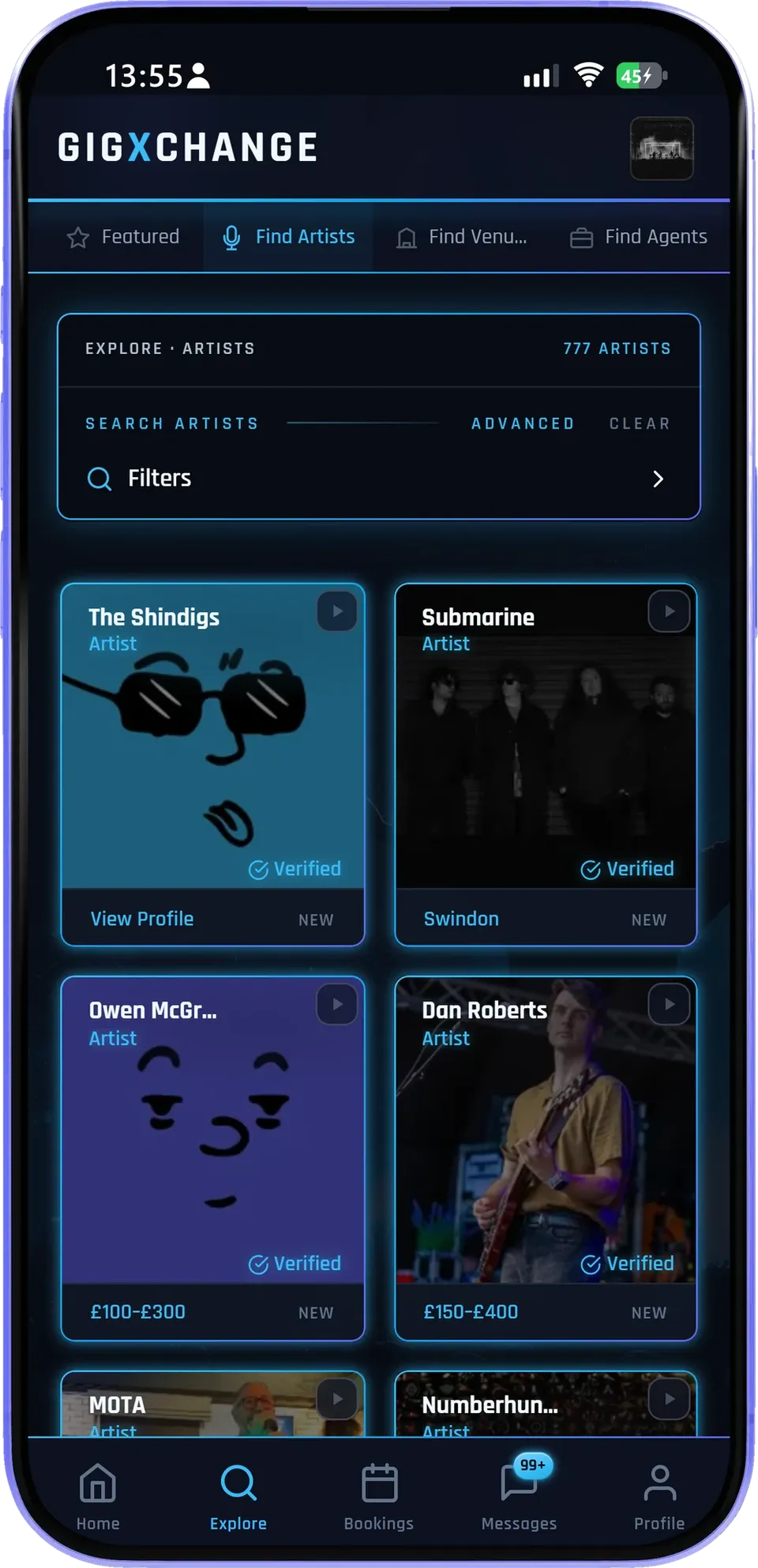
Find the right artists, venues and open gigs across the UK from one place — filtered by what actually matters to you: location, genre, date and budget.
- Search that fits youFilter by role, city, genre and availability to surface only the people and gigs worth your time.
- Smart Match suggestionsThe strongest matches rise to the top, so the right connection finds you — not just the loudest.
- Open gigs, liveBrowse gigs that need filling and apply in a tap — no cold outreach, no gatekeepers.
- 03 / 06
Bookings, end to end
Offer, negotiate and confirm a gig in a single thread — every date, fee and deposit agreed in one place and held to.
- One thread, start to finishThe whole deal lives in one conversation — no lost emails, no he-said-she-said.
- Negotiate with clarityCounter-offers, dates and fees are structured and tracked, so both sides always know where they stand.
- Held securelyThe deposit is held safely until the gig is done — performers get paid, bookers get peace of mind.
- 04 / 06
Messaging
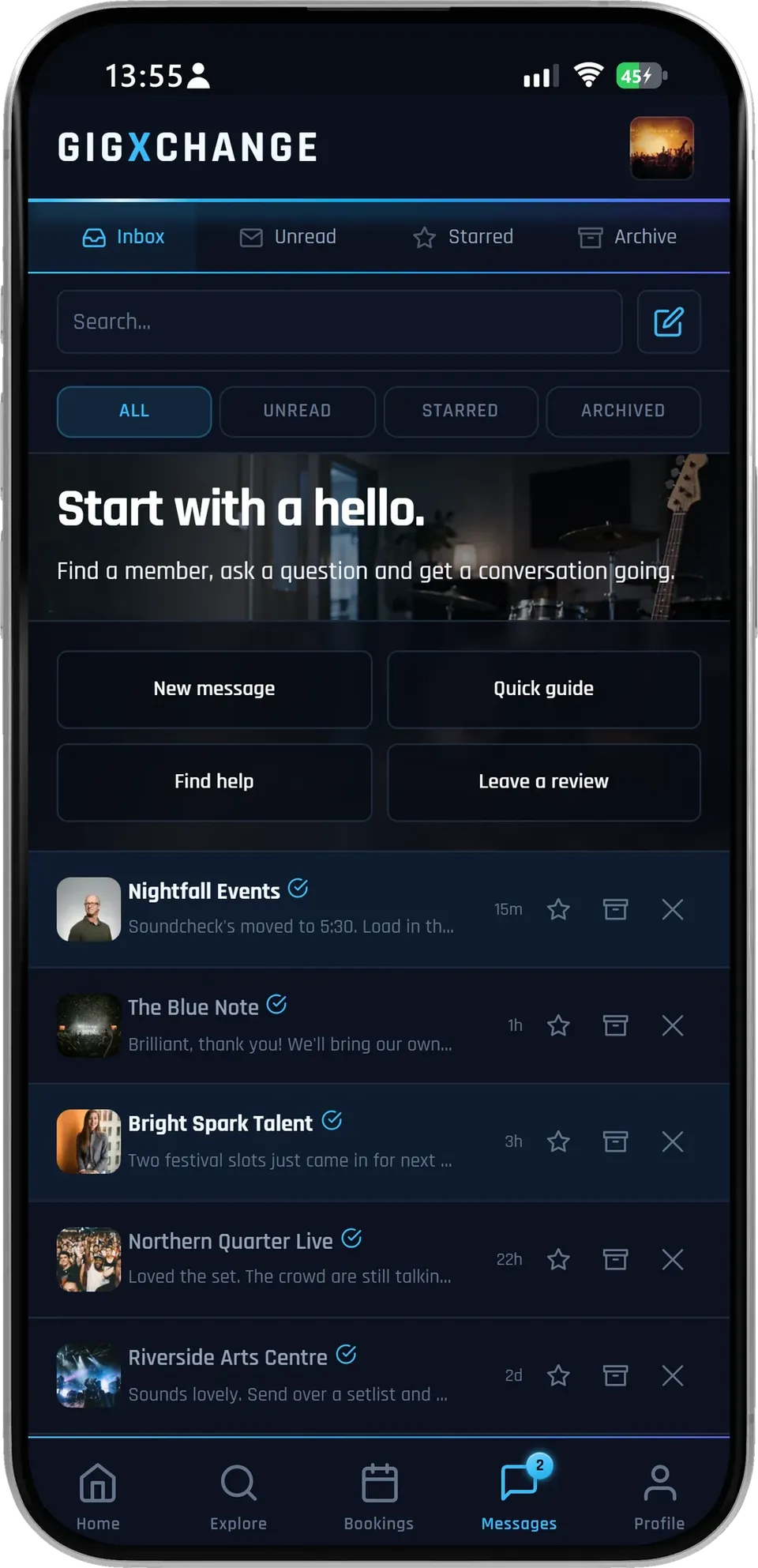
Agree the details before you commit. Direct, real-time conversations with venues, artists, agents and promoters — with bookings built right in.
- Talk first, book secondSort the awkward questions — sound, timings, fee — before anything's signed.
- Bookings inside the chatTurn a conversation into a confirmed offer without ever leaving the thread.
- Share availability & filesSend your calendar, riders and posters in-line, so everyone's working from the same page.
- 05 / 06
Your profile & EPK
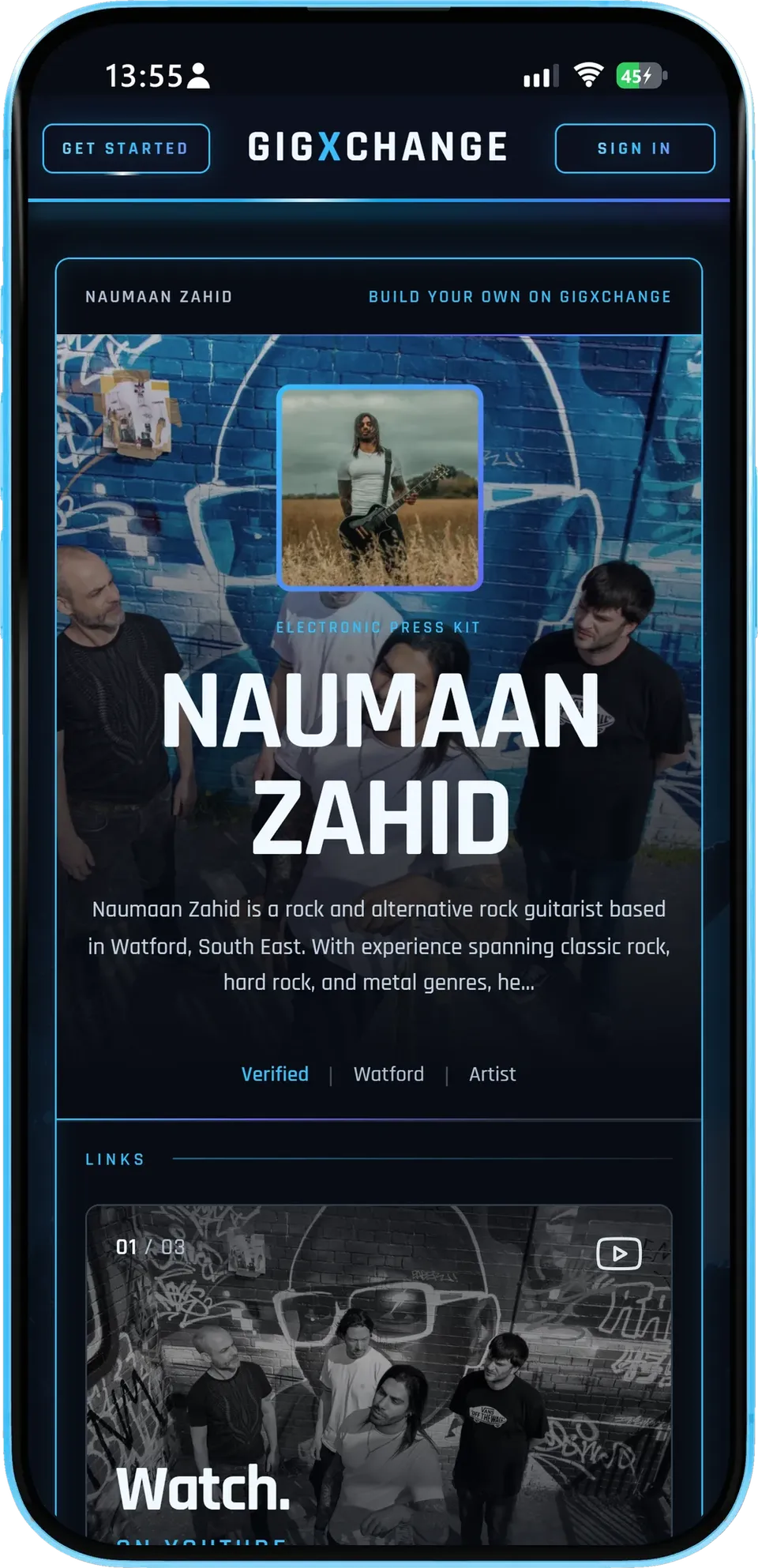
Your shop window to the whole UK scene — a profile and electronic press kit that does the selling for you, on the public web and inside the app.
- Built to be foundYour profile is a public page engineered for search and AI discovery — so people find you without you chasing them.
- A press kit that travelsMusic, photos, stats and past gigs in one shareable EPK that makes booking you an easy yes.
- Always currentUpdate once and it's live everywhere — no stale links, no outdated one-sheets.
- 06 / 06
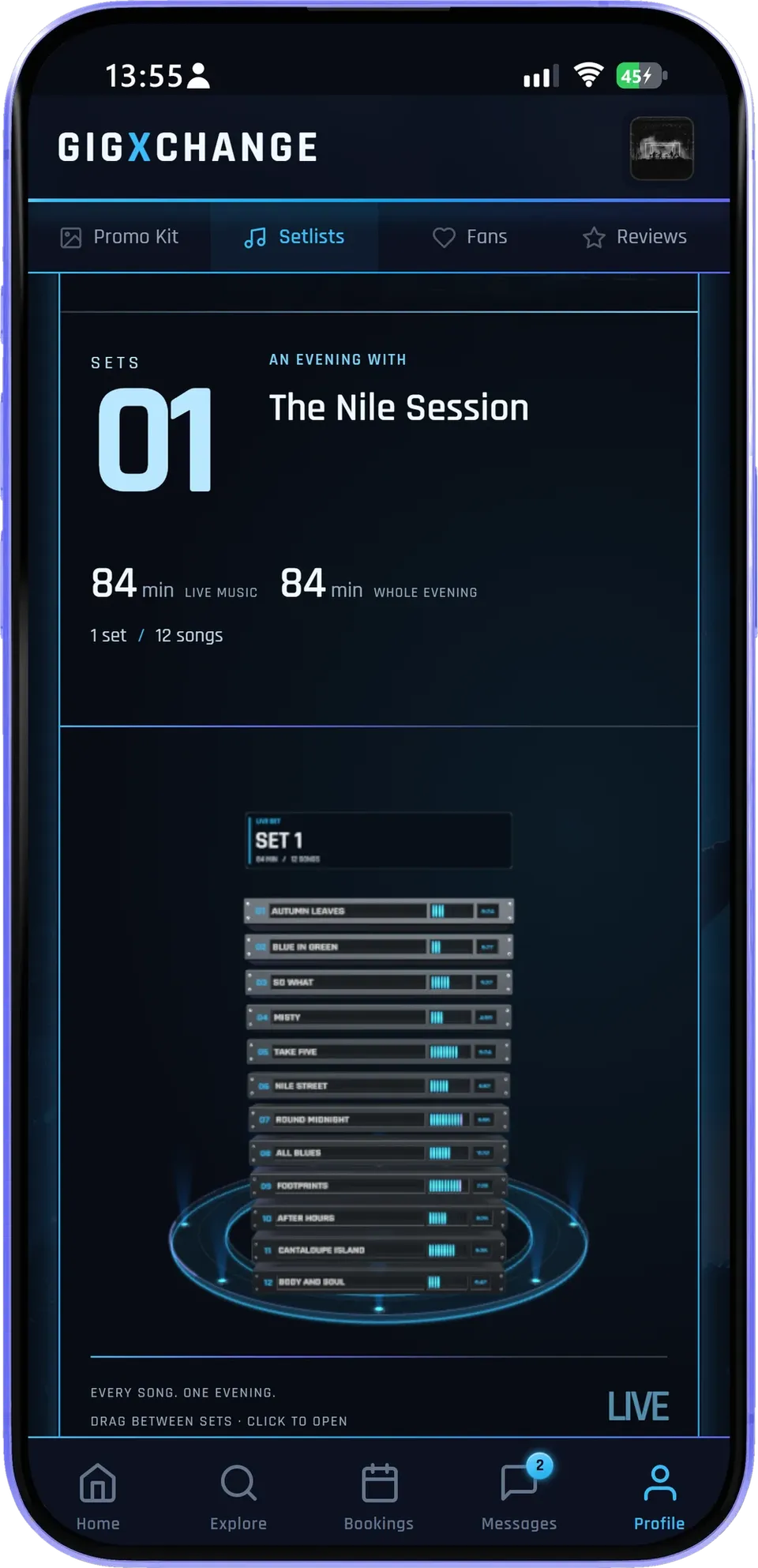
Setlists
Build a polished setlist in minutes and share it with the room — songs, keys and running order, ready for the night.
- Drag-and-drop running orderReorder songs in a tap and see the whole set take shape, page by page.
- Share it anywhereSend a clean, branded setlist to the band, the venue or the sound engineer in one tap.
- Reuse and adaptSave sets per act or venue and tweak the running order for the next gig without starting over.
- 01 / 06
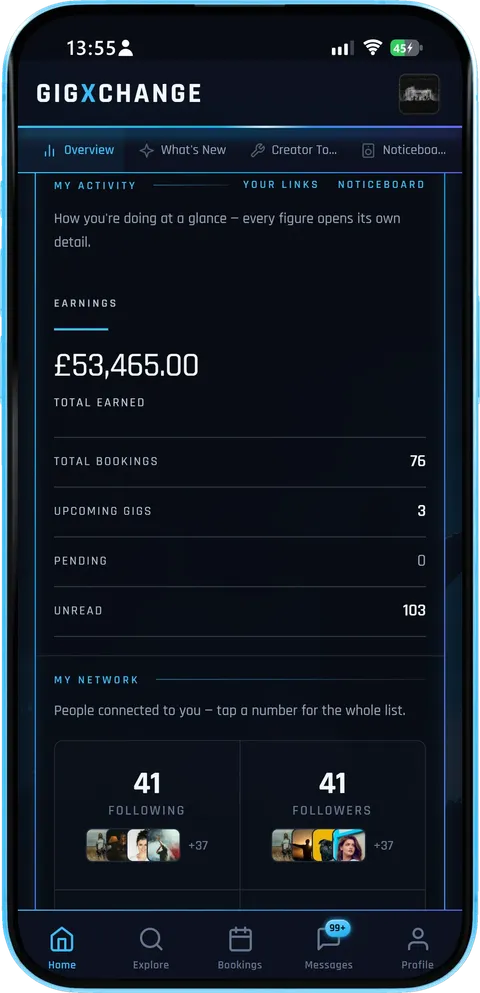
Your dashboard
The moment you log in, everything that matters is in front of you — what's booked, what you've earned, and what needs you next. No digging through tabs.
- Bookings at a glanceConfirmed, pending and upcoming gigs in one view — so nothing slips through the cracks.
- Earnings, trackedSee deposits held securely and payouts released, with a running total you can trust.
- Live activity feedNew messages, offers and event updates surface the second they happen — you're never the last to know.
- 02 / 06
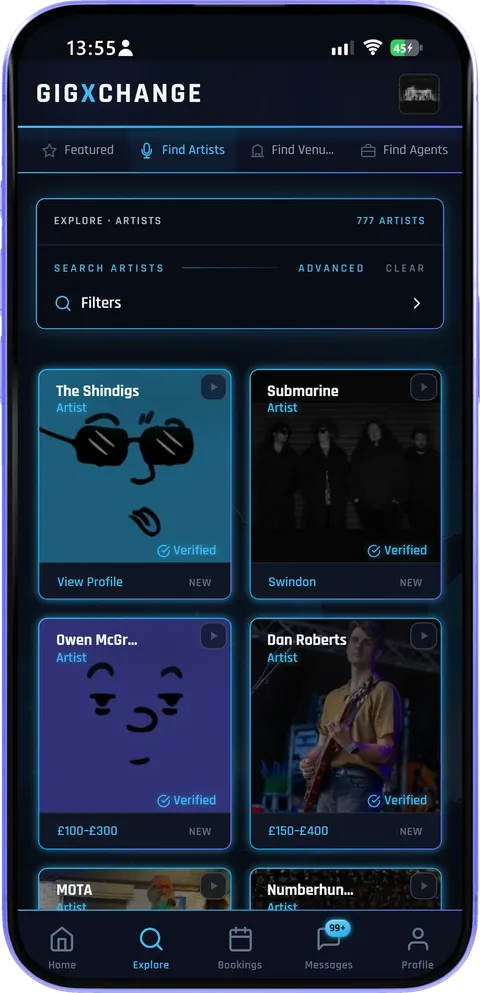
Explore the scene
Find the right artists, venues and open gigs across the UK from one place — filtered by what actually matters to you: location, genre, date and budget.
- Search that fits youFilter by role, city, genre and availability to surface only the people and gigs worth your time.
- Smart Match suggestionsThe strongest matches rise to the top, so the right connection finds you — not just the loudest.
- Open gigs, liveBrowse gigs that need filling and apply in a tap — no cold outreach, no gatekeepers.
- 03 / 06
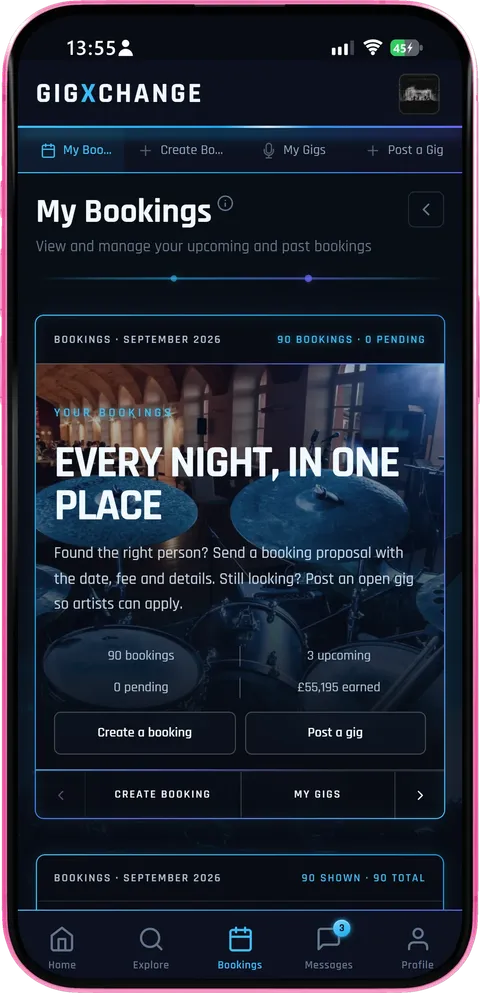
Bookings, end to end
Offer, negotiate and confirm a gig in a single thread — every date, fee and deposit agreed in one place and held to.
- One thread, start to finishThe whole deal lives in one conversation — no lost emails, no he-said-she-said.
- Negotiate with clarityCounter-offers, dates and fees are structured and tracked, so both sides always know where they stand.
- Held securelyThe deposit is held safely until the gig is done — performers get paid, bookers get peace of mind.
- 04 / 06
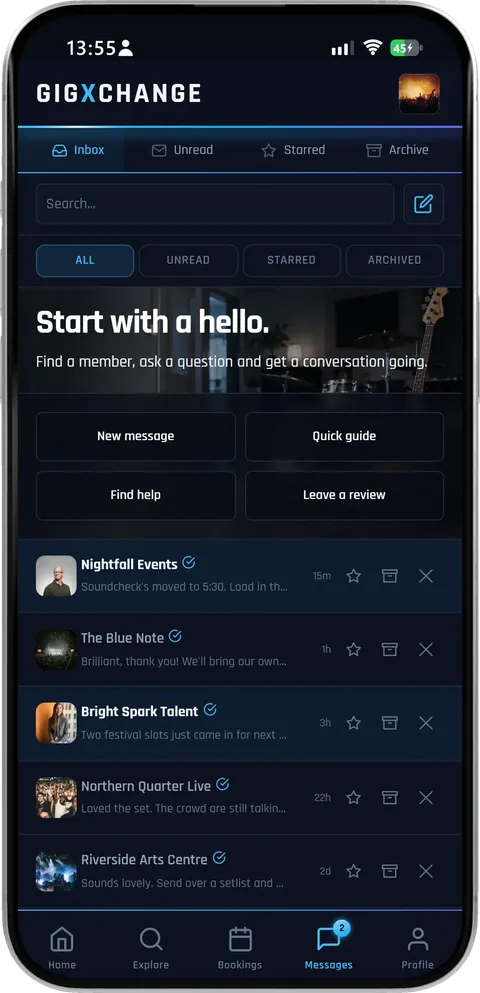
Messaging
Agree the details before you commit. Direct, real-time conversations with venues, artists, agents and promoters — with bookings built right in.
- Talk first, book secondSort the awkward questions — sound, timings, fee — before anything's signed.
- Bookings inside the chatTurn a conversation into a confirmed offer without ever leaving the thread.
- Share availability & filesSend your calendar, riders and posters in-line, so everyone's working from the same page.
- 05 / 06
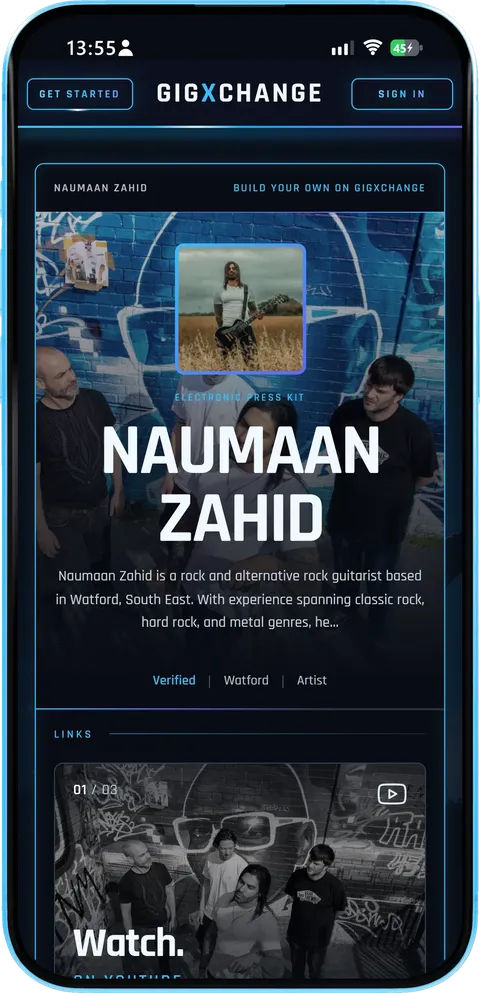
Your profile & EPK
Your shop window to the whole UK scene — a profile and electronic press kit that does the selling for you, on the public web and inside the app.
- Built to be foundYour profile is a public page engineered for search and AI discovery — so people find you without you chasing them.
- A press kit that travelsMusic, photos, stats and past gigs in one shareable EPK that makes booking you an easy yes.
- Always currentUpdate once and it's live everywhere — no stale links, no outdated one-sheets.
- 06 / 06
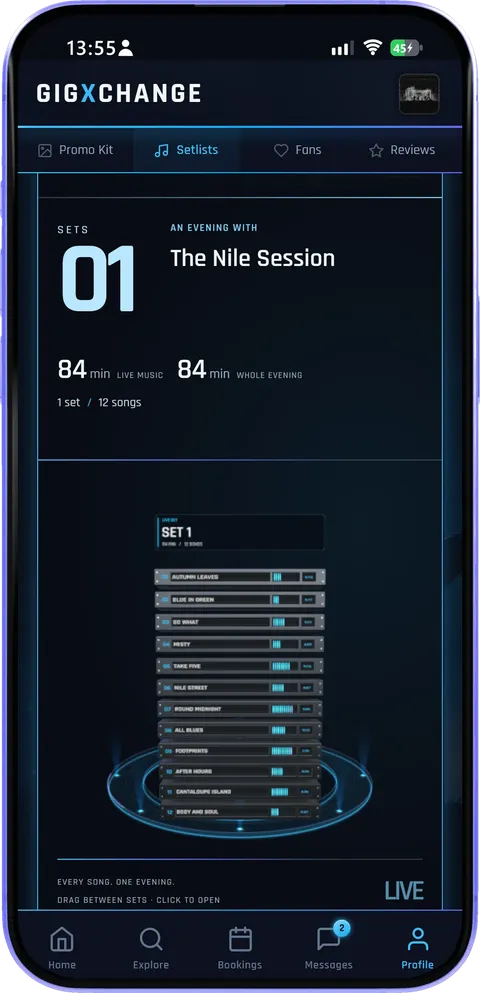
Setlists
Build a polished setlist in minutes and share it with the room — songs, keys and running order, ready for the night.
- Drag-and-drop running orderReorder songs in a tap and see the whole set take shape, page by page.
- Share it anywhereSend a clean, branded setlist to the band, the venue or the sound engineer in one tap.
- Reuse and adaptSave sets per act or venue and tweak the running order for the next gig without starting over.
11 — Questions7 answersContact Venues for Gigs FAQ
Straight answers to the questions artists ask most - what to send, what to charge, when to follow up and what you need in writing - each checked against the live GX Index fees and official sources.
12 — Keep exploring
Keep exploring
The other artist guides, the free tools that do the legwork for you, and the longer reads for brand-new acts - every one free, and every one written for artists getting booked in the UK.
| How to Start GiggingFrom your first open mic to your first paid gig - the set, the clip, the pitch and the fee | |
| Venue outreach templatesReady-to-send emails and messages for pitching venues | |
| EPK builderYour music, video and bio on one page bookers open | |
| Gig rate calculatorA fair fee for your act, town and night | |
| Booking your first gigThe longer read for brand-new acts | |
| GigXchange for artistsGet found and booked by venues, free |
| How to start gigging | |
| The complete guide to booking your first gig | |
| City gig guides |
Let venues come to you
Build a free artist profile, apply to the open gig slots venues post and agree the fee in chat - the contract is digital and payment is held securely until the gig is played.

How to Contact Venues for Gigs
Who books the music, what to send and when to chase - with live fees from the GX Index: UK pubs pay a median £265 (546 fees) for a solo act.



















Last updated: 31 October 2026
How do you contact a venue for a gig?
Find the person who books the music, then send one short email: who you are, a link to your music, two or three dates and your fee. UK pubs pay a median £265 (546 fees) for a solo act in the GX Index.
Most venues book by email or through a booking platform, not by phone. Keep the first message under 150 words, follow up once after a week, and show them live footage - the GigXchange venue directory lists 3,227 UK venues to start from.
Contact a venue in six steps
Contacting a venue for a gig takes six steps: get your music online, find venues that book your kind of act, find the booker, send a short pitch, follow up once and confirm in writing.
- Get your music and video onlineOne link a booker can open on a phone: a live clip, two or three tracks, a photo and your set length. An EPK puts it on one page.EPK
- Find venues that book your kind of actLook at who already plays there - a pub that books covers duos is a better first pitch than a jazz club. Search the venue directory by town.Venues
- Find the person who books the musicCheck the venue's website, its social pages and its gig listings for a booking email or a named promoter. Ask the bar staff if there is none.Listings
- Send a short pitchUnder 150 words: who you are, where you have played, a link, two or three dates and your fee. Name the venue so it is not a mass mailing.Template
- Follow up once, after a weekOne polite nudge with a new date or a fresh clip. No reply after that means not now - try again next season, never a third chase.Template
- Confirm the gig in writingDate, set times, fee, how and when you are paid, and what the venue provides. A short email or a contract stops arguments on the night.Contract
How to email a venue for a gig
To email a venue for a gig, send one short message to the booker: who you are, a link to your music and a live video, two or three dates and your fee. Everything should open on a phone in one tap.


What UK pubs pay for a gig
UK pubs pay a median £265 (546 fees) for a solo act, £325 (93 fees) for a duo and £350 (379 fees) for a three or four piece in the GX Index - quote inside that range and say what it covers.
These are medians of real advertised and agreed fees, not a rate card. The Musicians' Union publishes national minimum gig rates per player; the rate calculator turns your act, town and night into a fair figure to quote.

GX Index medians of real advertised and agreed fees - quote inside the range and say what it covers.
- Solo act £265 median · 546 observationsThe MU publishes no solo figure
- Duo £325 median · 93 observations
- 3 to 4 piece band £350 median · 379 observations
- 5+ piece band £525 median · 307 observations
Gig rate calculator · Every GX Index fee table · Musicians' Union national gig rates
Work out your gig fee
Work out a fair fee for your own act before you quote it: pick your line-up, your town and the kind of gig, and the calculator reads the live GX Index - a solo act's pub median is £265 (546 fees).
Venues that book acts like you
The venues most likely to book you are the ones already booking acts like yours near you. The GigXchange venue directory lists 3,227 UK venues, and the venues below book artists directly on GigXchange.
Start with the city guide for your town: it names the rooms that book live music, what they pay and who to ask.
Venues already booking on GigXchange
These venues book artists directly on GigXchange - 71 venues are members, each with a public profile showing what they book and where they are. Open one to check your act fits before you pitch them.

















Get booked by venues on GigXchange
On GigXchange venues come to you: build a free profile, apply to open gig slots and agree the fee in chat. 1,021 artists are on GigXchange, and payment is held securely until the gig is played.
- 01
Create a free artist profile
Your photos, music, video, fees and dates on one page venues can find and book from.
- 02
Apply to open gig slots
Venues post the dates they need filled; apply in two taps with your profile attached.
- 03
Agree the fee and the details in chat
The offer, the counter-offer and the confirmed booking stay in one thread, with a digital contract.
Create a free artist profile · Apply to open gig slots · Agree the fee and the details in chat
See it in action
Your profile, the gigs venues post, the booking chat, the EPK and the setlists - the free artist side of GigXchange, screen by screen. Scroll and the phone follows you through the app.
- 01 / 06
Your dashboard
The moment you log in, everything that matters is in front of you — what's booked, what you've earned, and what needs you next. No digging through tabs.
- Bookings at a glanceConfirmed, pending and upcoming gigs in one view — so nothing slips through the cracks.
- Earnings, trackedSee deposits held securely and payouts released, with a running total you can trust.
- Live activity feedNew messages, offers and event updates surface the second they happen — you're never the last to know.
- 02 / 06
Explore the scene
Find the right artists, venues and open gigs across the UK from one place — filtered by what actually matters to you: location, genre, date and budget.
- Search that fits youFilter by role, city, genre and availability to surface only the people and gigs worth your time.
- Smart Match suggestionsThe strongest matches rise to the top, so the right connection finds you — not just the loudest.
- Open gigs, liveBrowse gigs that need filling and apply in a tap — no cold outreach, no gatekeepers.
- 03 / 06
Bookings, end to end
Offer, negotiate and confirm a gig in a single thread — every date, fee and deposit agreed in one place and held to.
- One thread, start to finishThe whole deal lives in one conversation — no lost emails, no he-said-she-said.
- Negotiate with clarityCounter-offers, dates and fees are structured and tracked, so both sides always know where they stand.
- Held securelyThe deposit is held safely until the gig is done — performers get paid, bookers get peace of mind.
- 04 / 06
Messaging
Agree the details before you commit. Direct, real-time conversations with venues, artists, agents and promoters — with bookings built right in.
- Talk first, book secondSort the awkward questions — sound, timings, fee — before anything's signed.
- Bookings inside the chatTurn a conversation into a confirmed offer without ever leaving the thread.
- Share availability & filesSend your calendar, riders and posters in-line, so everyone's working from the same page.
- 05 / 06
Your profile & EPK
Your shop window to the whole UK scene — a profile and electronic press kit that does the selling for you, on the public web and inside the app.
- Built to be foundYour profile is a public page engineered for search and AI discovery — so people find you without you chasing them.
- A press kit that travelsMusic, photos, stats and past gigs in one shareable EPK that makes booking you an easy yes.
- Always currentUpdate once and it's live everywhere — no stale links, no outdated one-sheets.
- 06 / 06
Setlists
Build a polished setlist in minutes and share it with the room — songs, keys and running order, ready for the night.
- Drag-and-drop running orderReorder songs in a tap and see the whole set take shape, page by page.
- Share it anywhereSend a clean, branded setlist to the band, the venue or the sound engineer in one tap.
- Reuse and adaptSave sets per act or venue and tweak the running order for the next gig without starting over.
Contact Venues for Gigs FAQ
Straight answers to the questions artists ask most - what to send, what to charge, when to follow up and what you need in writing - each checked against the live GX Index fees and official sources.
More answers: How to start gigging · The complete guide to booking your first gig · City gig guides

Let venues come to you
Build a free artist profile, apply to the open gig slots venues post and agree the fee in chat - the contract is digital and payment is held securely until the gig is played.